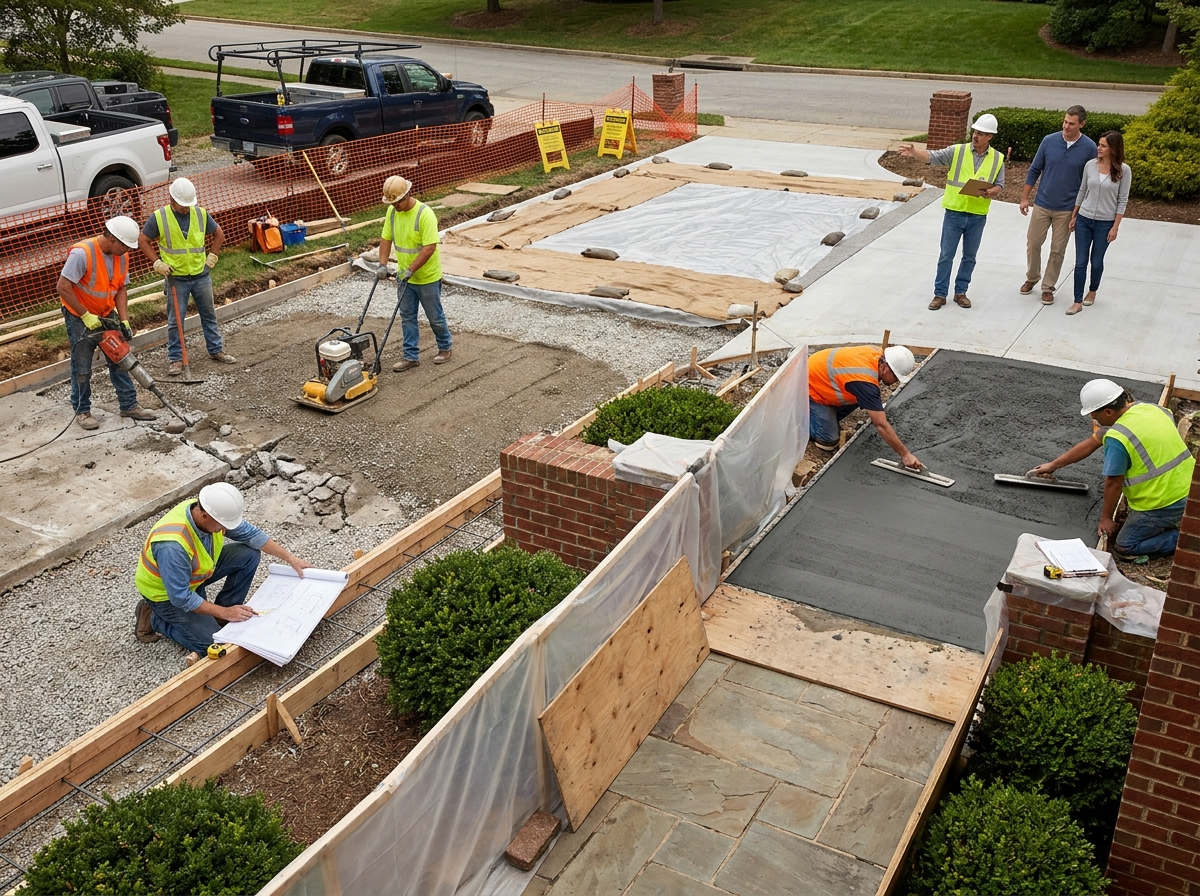
What Should Columbus Homeowners Know About Concrete Prices in 2026?
Planning a concrete project in Columbus starts with a simple wish. You want a clear sense of what a job might cost, what drives that cost, and how to tell a fair written estimate from a vague one. This guide brings those answers together in one place. It gathers our published planning ranges, explains the factors behind them, and links to detailed guides for each cost question you are likely to ask next.
We built this hub for homeowners in Dublin, Westerville, Upper Arlington, Worthington, Hilliard, Gahanna, Grove City, Reynoldsburg, Powell, and Pickerington. Whether you are planning a driveway, a patio, a sidewalk, or a repair, the same principles apply. Scope decides cost more than any single rate does. Base work, drainage, access, finish, and Columbus soil and weather all shape the final written estimate. Use this guide to understand the ranges, then follow the links to the detail that matches your project.
What published ranges should you use for planning?
For planning, we use $6-12 per sq ft for driveway and patio work, $3-10 per sq ft for resurfacing, $8-18 per sq ft for stamped work, and $1.20-1.90 per sq ft for demolition. Leveling is priced per job, typically $500-3000 per job. These are ranges that vary by project, not quotes. Use them to sense-check a written estimate, and ask which scope item explains a figure inside or outside a range.
How does per-yard pricing fit into a finished project?
Many homeowners start by asking about material pricing, because a yard is a concrete unit they can picture. Material pricing matters, but it is only one part of a finished job. Delivery, forming, base preparation, labor, finishing, joints, curing, and cleanup all sit alongside material. That is why a material-only figure can look low while a finished-project figure looks higher, even when both describe the same slab.
Our guide to per-yard drivers explains mix design, volume, access, preparation, finishing, and curing in detail. It also explains why small jobs can carry a higher cost per yard, since fixed costs spread across fewer yards. Read that guide if material pricing is your starting question, then return here to see how material fits into the finished ranges above.
How do Ohio soil and weather change the cost conversation?
Columbus concrete lives in clay soil that swells when wet and shrinks when dry. That movement can settle or crack a slab on a weak base, so grading, compaction, and drainage deserve serious attention. Freeze-thaw cycles add stress, because water in pores and cracks expands when it freezes. Road salt increases surface wear, especially on driveways and sidewalks near treated streets.
Our Ohio-focused guide on Ohio pricing looks at those factors in depth. It explains why air-entrained mixes, joint planning, curing, and drainage matter here, and how to ask about them in a written estimate. If your main concern is longevity in Ohio conditions, that guide is the best next read after this hub.
Why is per-square-foot pricing often easier for budgeting?
Finished-project pricing bundles material and labor into a rate tied to area, which makes budgeting more intuitive for driveways, patios, and walkways. A per-square-foot rate still varies with thickness, base, removal, finish, and access, so it is not a single fixed number. It is, however, easier to compare across estimates when scopes are named clearly.
Our guide to per-square-foot pricing breaks down size, shape, base work, drainage, removal, reinforcement, finish, and access. It also explains why leveling is priced per job instead. If you are comparing driveway or patio quotes, that guide will help you line up scopes side by side rather than comparing bare rates.
What should you know about driveway pricing specifically?
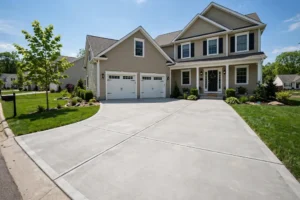
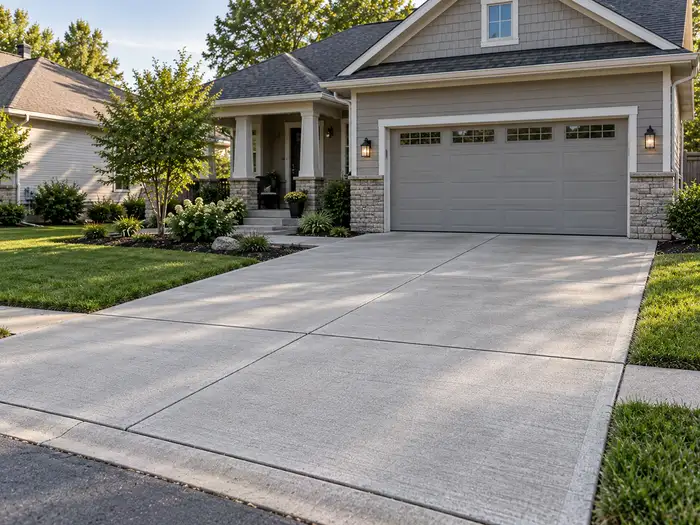
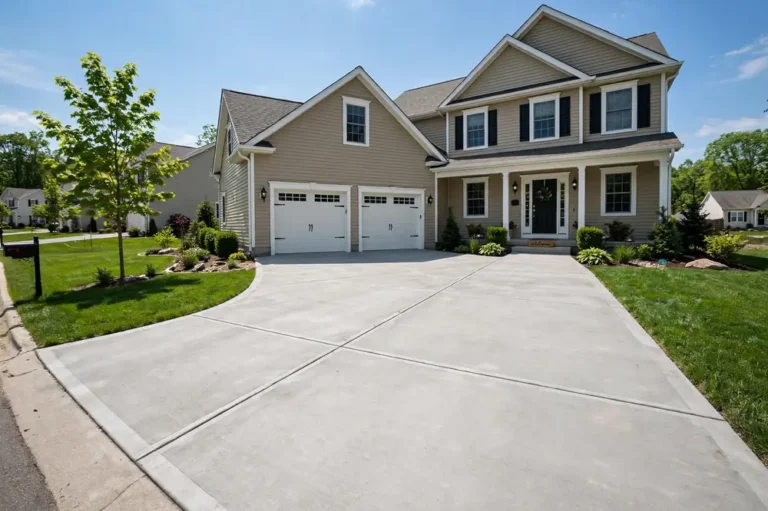
Driveways carry vehicles, so they need more attention to thickness, base strength, joint spacing, and drainage than a light walkway does. Size, removal of an old driveway, slope, finish, and access all shape the scope. A driveway that needs full removal and a fresh base will differ from a driveway built on a sound, well drained foundation.
Our detailed guide to driveway pricing walks through those factors and the published driveway range. It also covers drainage away from garages and foundations, finish options, and the questions to ask before approving a replacement. Read it when a driveway is your project, and use it to check that your written estimate names each major scope item.
How does ordering by the truckload affect small and large jobs?
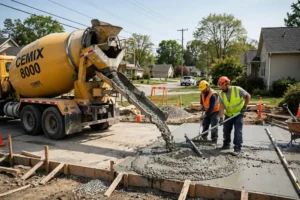
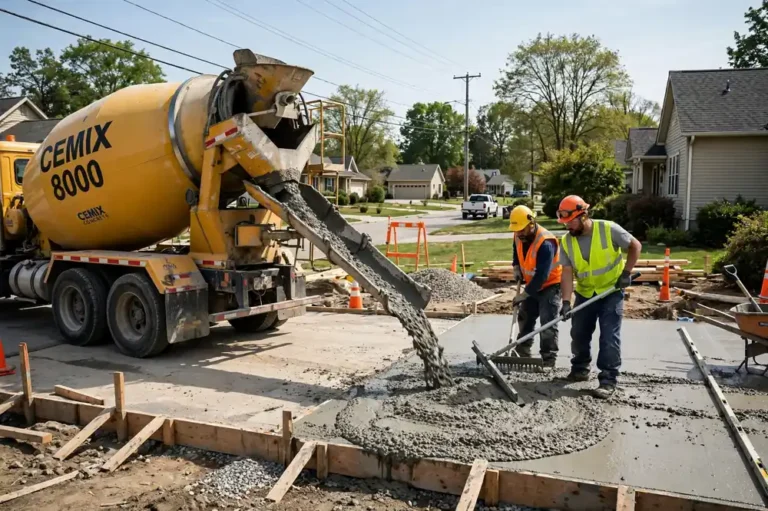
Concrete arrives by truck, and ordering the right volume matters for cost and quality. Large pours spread delivery and crew costs across more material, while small jobs carry similar fixed effort across less material. Minimum load considerations, delivery access, placement method, and pour sequencing can all affect the total, even when the slab itself is modest.
Our guide to truckload considerations explains volume ordering, access factors, and why small jobs often cost more per yard. It uses written-estimate language only, because truckload totals depend on your volume, access, mix, and scope. Read it before you assume a small repair should cost a small fraction of a large pour.
How do you choose a contractor once you understand pricing?
Pricing knowledge helps most when it leads to a better contractor conversation. A good written estimate names area, thickness, mix, base, drainage, removal, finish, joints, curing, and cleanup. It also names exclusions, so you know what could change if hidden damage appears. Comparing those named items is far more useful than comparing totals alone.
Our guide on choosing a contractor gives you questions to ask, red flags to watch for, and Ohio-specific points about soil, drainage, and winter durability. It is the highest value read in this series if you are close to hiring, because it turns pricing knowledge into a hiring checklist. Pair it with this hub, and you will enter contractor conversations prepared rather than guessing.
Which service scope fits your problem?
Pricing guides help you budget, but service guides help you choose the right work. If a slab has settled but remains sound, concrete leveling may restore it without full replacement. If cracking or surface wear is the main issue, concrete repair may be the practical path. If a driveway is worn out, our concrete driveways scope covers replacement with proper base and drainage. Sidewalks, steps, garage floors, sealing, and foundations each have their own scope pages as well, and reading the one that matches your surface will sharpen your questions.
Not every problem needs the most expensive solution, and not every cheap solution lasts. A site discussion that names the problem honestly, whether it is settling, cracking, drainage, or age, will point to the scope that fits. That honesty matters more than any range, because the wrong scope at a good price is still the wrong scope.
What is the best way to use this hub?
Start with the range that matches your project type, then read the detailed guide linked for that question. If you are unsure which project type fits, read the service pages for leveling, repair, and driveways first, then return to the cost guides. If you are close to hiring, read the contractor guide last, because it will help you use everything else you learned.
When you are ready to discuss your project, request a free estimate. Tell us about your surface, your neighborhood, your access, and any drainage or cracking concerns you have noticed. We will talk through scope, preparation, and finish in plain language, and we will put the estimate in writing so you can compare it fairly. Good concrete pricing starts with a clear scope, and a clear scope starts with a clear conversation.