What Drives Concrete Driveway Prices in Columbus?
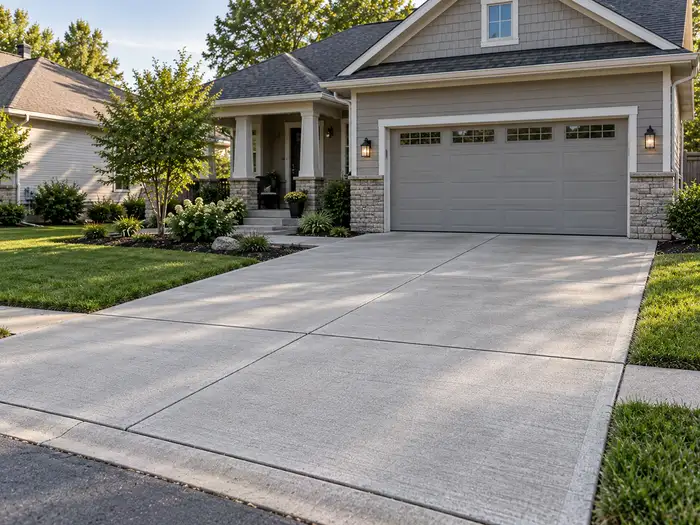
A driveway is the hardest working concrete surface at most Columbus homes. It carries vehicles daily, faces road salt in winter, endures freeze-thaw cycles, and channels water from the street toward your garage. Those demands shape both its design and its cost. We wrote this guide to explain driveway pricing clearly, using only published planning ranges and written-estimate language, so you can compare scopes with confidence.
We serve homeowners across Dublin, Westerville, Upper Arlington, Worthington, Hilliard, Grove City, Gahanna, Reynoldsburg, and Powell. In each area we see the same truth. A driveway estimate reflects size, removal, base preparation, thickness, finish, drainage, and access, not area alone. Understanding those factors helps you see why two driveways of similar size can receive different written estimates, and why the lowest figure is not always the best value.
How does driveway size and shape affect the total?
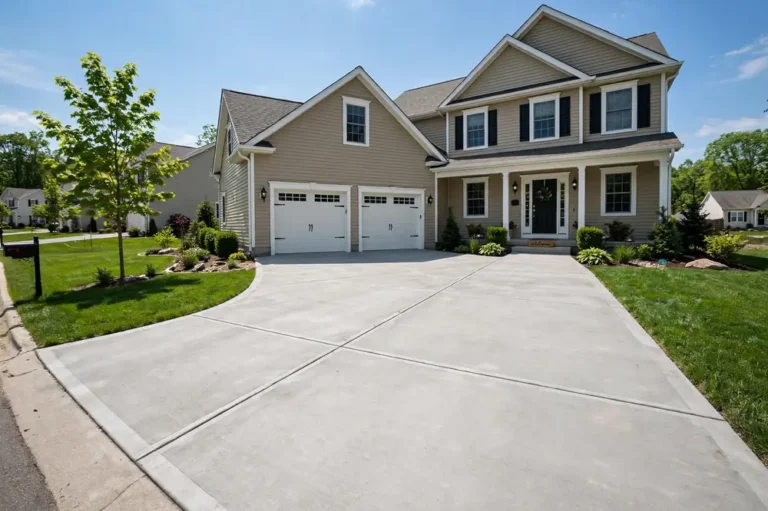
Size is the most obvious driver, because a larger driveway uses more material, more forming, and more finishing labor. Shape matters almost as much. A simple rectangle is efficient to form and finish. A curved driveway, a widened parking pad, a turn-around area, or a driveway with steps and borders needs more forming labor, more joint planning, and more finishing care. Those details add time even when the total area grows only modestly.
Layout also affects drainage and use. A driveway that slopes correctly moves water away from your garage and foundation. A driveway with low spots holds water, which becomes ice in winter and accelerates surface wear. When you discuss size, also discuss slope and drainage. A well planned layout protects both your home and your new surface, and it should appear in the written scope.
Why does removal of an old driveway change the price?
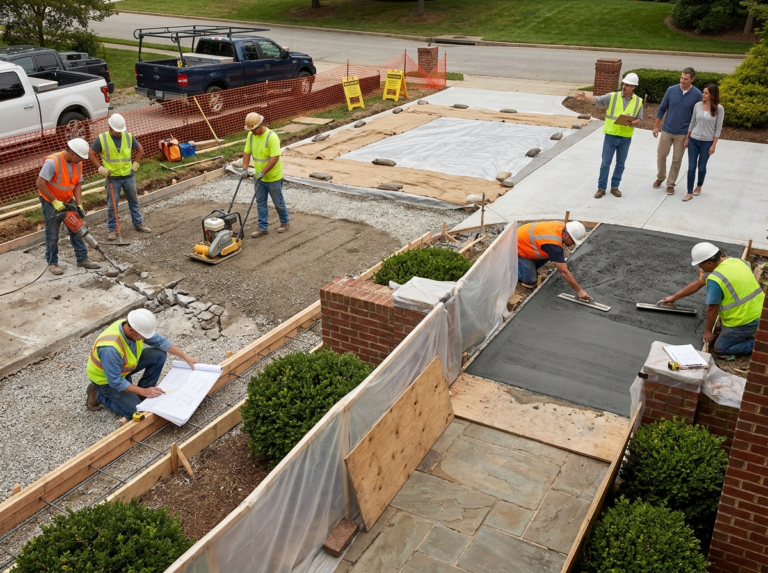
Many Columbus driveways are replacements, not first pours. Removing old concrete involves breaking, hauling, and disposing of heavy material. A thick driveway, a slab with reinforcement, or a driveway with multiple layers takes longer to remove than a thin walkway. Access for removal equipment matters too, because a tight lot may limit machine size and require more manual work.
Removal also reveals what lies beneath. A crew may find soft soil, a failed base, tree roots, or poor drainage once old concrete is gone. A good written estimate names removal and disposal clearly, and it explains what happens if hidden base problems appear. That transparency protects you from a surprise mid-project, and it helps you compare estimates fairly. One quote that includes full removal and base work is not comparable to another that leaves those items out.
How do base preparation and thickness protect a driveway?
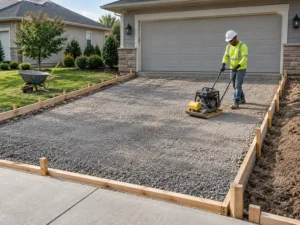
Base preparation is the foundation of a driveway that lasts. In Columbus, clay soil moves with moisture, so a compacted stone base, adequate thickness, and proper grading matter greatly. A strong base distributes vehicle loads, resists settling, and supports drainage. A weak or thin base allows movement, cracking, and uneven settling, especially under vehicle weight and winter cycles.
Thickness and joint spacing work with the base. Driveways need sufficient thickness for vehicle loads, and joints need placement that controls where cracking occurs. Reinforcement choices, joint layout, and curing method should all be named in your scope. When estimates differ, those named items often explain why. A driveway built with proper base, thickness, and joints costs more to build correctly than one built thin, but it usually costs far less over its life.
How do access, slope, and drainage shape the estimate?
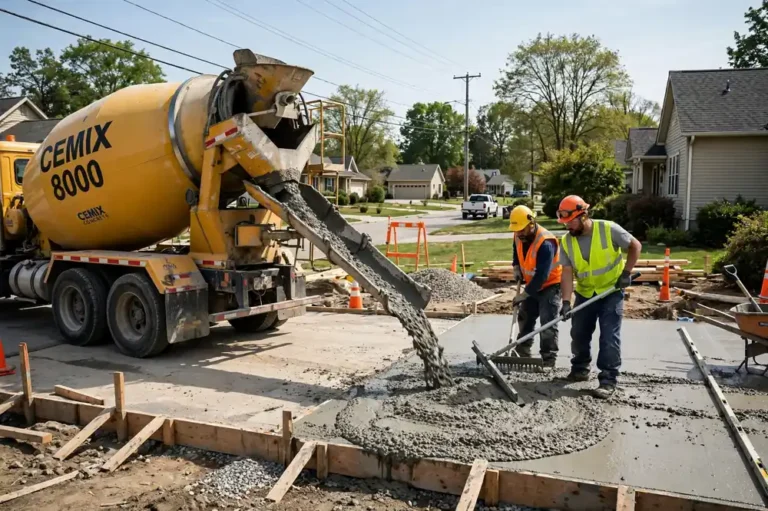
Access changes labor more than many homeowners expect. A truck that can back up to the driveway forms keeps pouring efficient. A sloped lot, a narrow street, a tight gate, or soft ground after rain can require a pump, wheelbarrows, or extra crew members. Each added step takes time, and that time appears in the written estimate. Mention access constraints early, so the estimate reflects your real site rather than an ideal one.
Drainage deserves equal attention. Water should flow away from your garage, foundation, and sidewalks, not pool on the driveway or run toward your home. Grading, slope, drains, and joint placement all contribute to that plan. In Columbus, where clay holds water and winters freeze standing water, drainage is not a minor detail. It is a durability feature, and it should be named in your scope.
What published range helps you plan a driveway budget?
For planning, we use $6-12 per sq ft for driveway and patio work as a range that varies by project. That range covers a finished project scope, not material alone, and your written estimate will reflect your size, removal needs, base condition, finish, access, and drainage plan. A simple driveway with good access and a sound base may sit differently from a large, curved driveway needing full removal, a fresh base, and a decorative finish.
Use the range as a sense-check rather than a quote. If an estimate falls outside it, ask which factor explains the difference. A good contractor will point to removal, base work, finish, access, or drainage rather than offering vague reassurance. That explanation helps you compare fairly and avoid a scope gap that could cost more later.
When is leveling or repair better than a full driveway replacement?
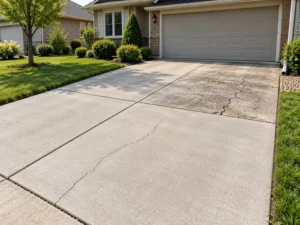
Not every worn driveway needs replacement. If the main problem is settling in sections that remain sound, concrete leveling may restore an even surface without tearing out the whole driveway. If cracking, joint damage, or surface wear is limited, concrete repair may extend the driveway’s life at a lower scope. Replacement through our concrete driveways service makes sense when a driveway is widely cracked, heaved, or broken beyond practical repair.
That choice changes both cost and disruption. Leveling and repair use less demolition and less material than a full pour, and they often finish faster. They are not suitable for every driveway, though. A driveway with structural failure or widespread breakup usually needs replacement. An honest site discussion will sort out which path fits your driveway, and that discussion should come before any final number.
Where does the broader cost picture fit?
Driveway pricing makes more sense alongside other cost guides. Our 2026 cost guide gathers published ranges for driveways, leveling, resurfacing, stamped work, and demolition, and it links to guides on per-yard drivers, per-square-foot pricing, Ohio conditions, truckload ordering, and choosing a contractor. Reading the hub can help you place your driveway project in context, especially if you are also considering a patio, sidewalk, or repair.
That broader view also helps you sequence work. Some homeowners combine a driveway replacement with sidewalk or patio work to share mobilization and base preparation effort. Others phase work to match budget and priorities. Either approach works better when each scope is written clearly, because you can compare combined and phased options without guessing what each includes.
What is the next step for your driveway?
Start by noting your driveway size, shape, access, drainage patterns, and visible problems such as cracking, settling, or pooling water. Photos help, especially after rain, because they show where water sits. Then ask for a written estimate that names removal, base, thickness, drainage, finish, joints, curing, sealing, and cleanup. Compare those scopes carefully before you compare totals.
When you are ready, request a free estimate. Tell us about your driveway, your neighborhood, and any concerns about drainage, salt damage, or winter cracking. We will talk through leveling, repair, and replacement honestly, and we will put the scope in writing so you can decide with confidence. A driveway built on a strong base, with good drainage and a suitable finish, is an investment that should serve your home through many Columbus winters.