
Concrete Driveways • Columbus, Ohio
Concrete Driveway Columbus Ohio: Installation & Replacement
A concrete driveway is more than a finished surface. Site conditions, drainage,
preparation, construction details, finish selection, curing, and vehicle use all
influence the scope of the project. This page explains the decisions Columbus
property owners should understand before comparing driveway proposals.
Project planning
Finish options
Clear scope
On this page 12 sections
- What Makes a Concrete Driveway Project Different?
- Concrete Driveways for Columbus Properties
- Concrete Driveway Replacement in Columbus, Ohio
- How Concrete Driveway Columbus Ohio Installation Works
- What Influences Long-Term Driveway Performance?
- Concrete Driveway Finish Options
- What Affects Concrete Driveway Cost in Columbus?
- How to Compare Concrete Driveway Contractors in Columbus, Ohio
- What to Expect Before, During, and After Driveway Installation
- Concrete Driveway FAQs for Columbus Property Owners
- Plan Your Concrete Driveway Project
- Before you approve a driveway proposal
Planning First
What Makes a Concrete Driveway Project Different?
Driveways carry vehicle loads and connect directly with garages, sidewalks,
streets, drainage paths, landscaping, and adjoining pavement. A useful proposal
should therefore address the actual site instead of treating every driveway as
the same project.
Existing Surface
Concrete, asphalt, gravel, lawn, or new construction
Site Conditions
Access, grade, subgrade, drainage, adjoining surfaces
Project Scope
Removal, preparation, forms, placement, finish, curing, cleanup
Intended Use
Passenger vehicles, heavier loading, parking layout, access needs
Local Planning
Concrete Driveways for Columbus Properties
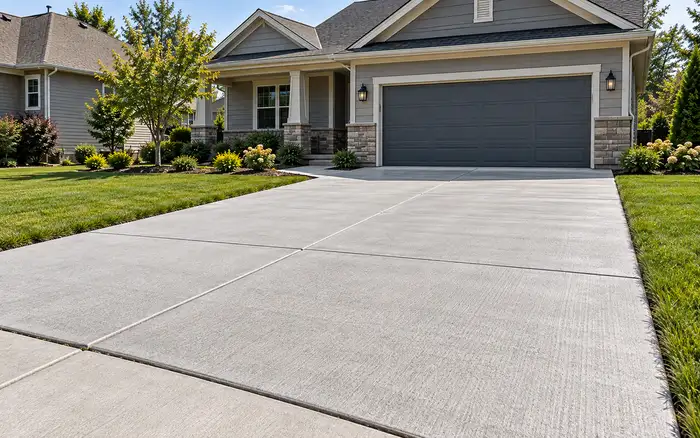
Columbus driveway planning should account for the property itself and for the seasonal conditions common to Ohio. Freeze-thaw exposure, water movement, snow and ice, changing ground moisture, and repeated vehicle loading make preparation and drainage important topics to discuss during a site evaluation.
Local relevance does not mean using a single universal specification. Concrete thickness, reinforcement, base design, concrete properties, joint layout, and curing requirements should be established for the actual project rather than copied from a generic rule.
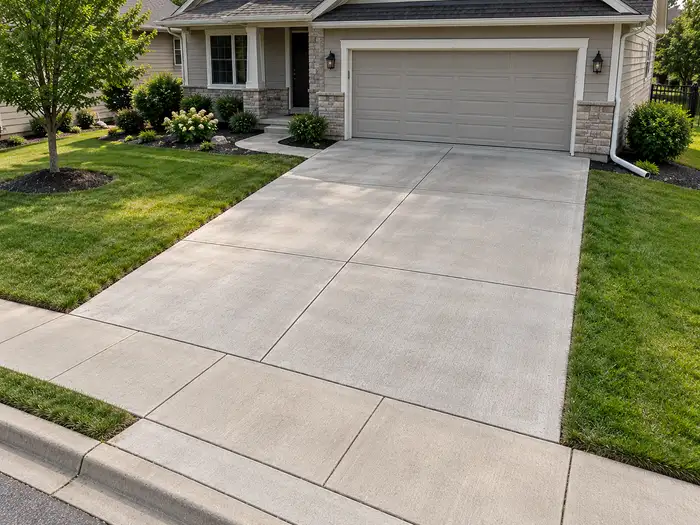
- How water will move away from the driveway and nearby structures
- How the existing surface and underlying material will be handled
- How the driveway meets the garage, sidewalk, apron, or surrounding pavement
- How access and construction sequencing affect the property
Existing Driveways
Concrete Driveway Replacement in Columbus, Ohio
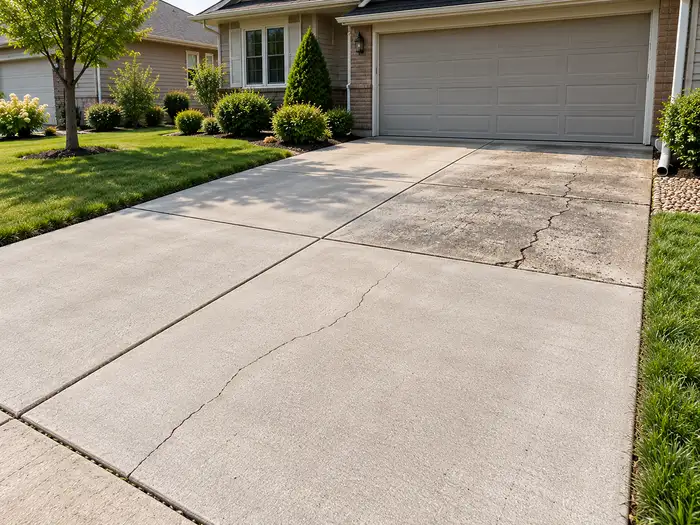
Replacement becomes a consideration when the existing driveway no longer meets functional, appearance, drainage, or long-term project goals. The decision should be based on the condition of the entire driveway and the cause of the damage, not on a single crack viewed in isolation.
When Repair May Be Worth Evaluating
Localized cracks, small areas of surface deterioration, or limited isolated defects may justify a repair assessment when the surrounding driveway remains suitable for continued use.
When Replacement May Need Evaluation
Widespread deterioration, repeated movement, substantial settlement, recurring failures, drainage problems, or a layout that no longer works for the property can support a broader replacement discussion.
Look Beyond the Visible Damage
The useful question is not only what is cracked, but why. Soil movement, drainage, inadequate preparation, age, loading, or other site conditions may affect the appropriate solution.
Repair Evaluation
- Damage appears isolated
- Surrounding slabs remain functional
- Underlying movement may be limited
- Owner goals favor targeted correction
Replacement Evaluation
- Damage is widespread
- Sections have settled or moved
- Problems repeatedly return
- Drainage or layout requires broader correction
Installation Workflow
How Concrete Driveway Columbus Ohio Installation Works
Exact methods and specifications vary by property, but a well-defined driveway
proposal should make the main construction stages understandable before work begins.
Site Evaluation and Measurements
The project begins with dimensions, current surface conditions, grade, drainage, garage and street transitions, access, intended vehicle use, and other site constraints.
Removal and Excavation
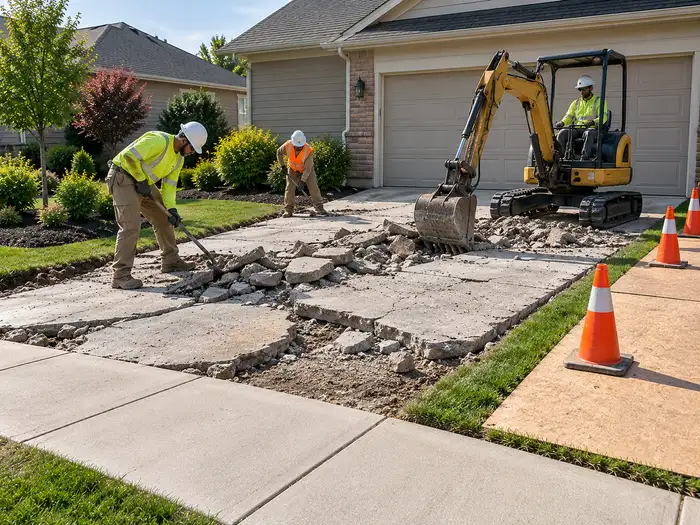
Replacement projects may require breaking and removing old concrete or asphalt, hauling debris, and excavating where needed to establish the planned elevation and preparation.
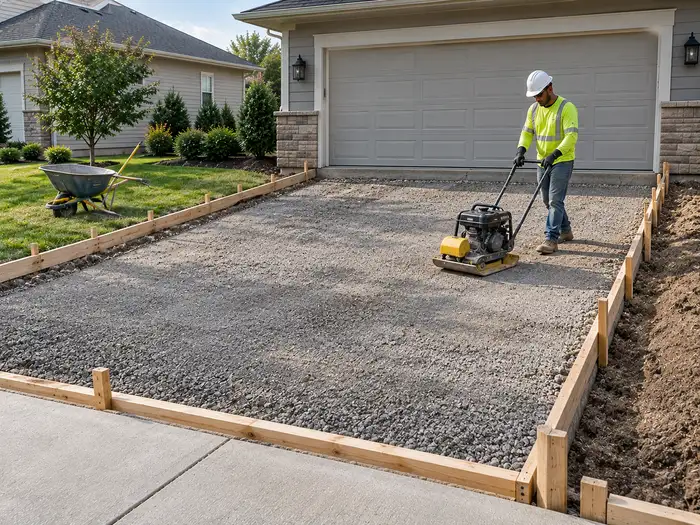
Subgrade and Base Preparation
The underlying support should be evaluated and prepared for the intended driveway design. Grading, compaction, and base-related decisions should respond to actual site conditions.
Forms and Project Specifications
Forms establish the driveway geometry and elevations. Thickness, reinforcement, concrete properties, transitions, and other technical requirements should be defined for the project rather than assumed.
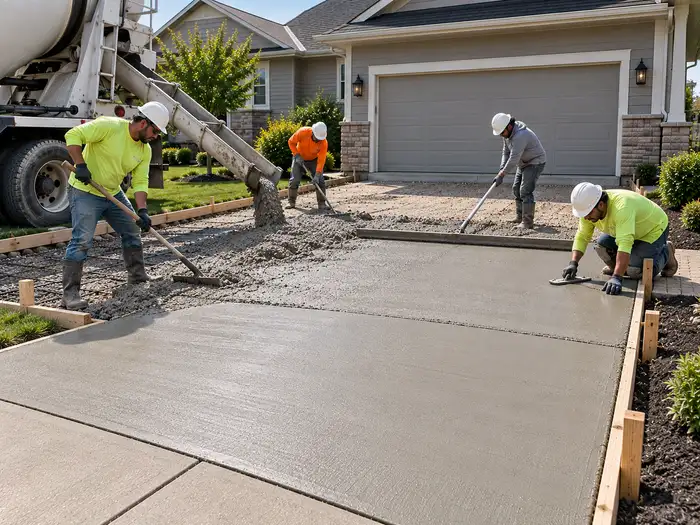
Concrete Placement and Finishing
Fresh concrete is placed, consolidated, shaped, and finished according to the selected surface and project requirements. Finish expectations should be agreed upon before placement.
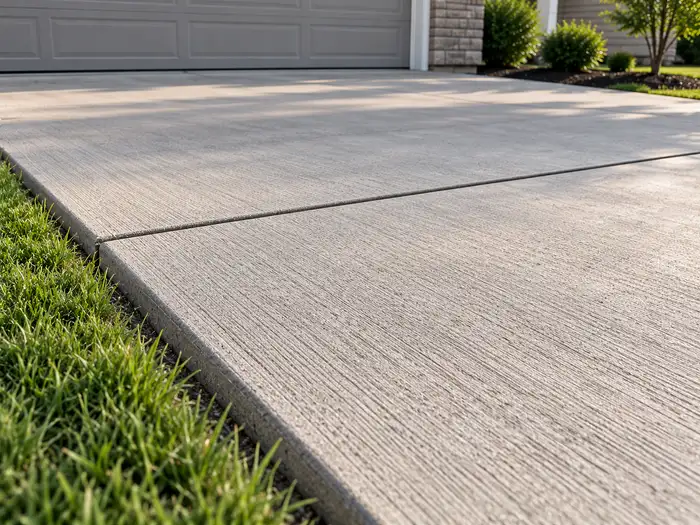
Joint Planning and Crack Control
Concrete naturally changes volume as it cures and responds to conditions over time. Joint planning is one part of managing where movement is accommodated and should be discussed as part of the installation.
Curing and Protection
Curing supports concrete performance after placement. Vehicle access and protection instructions should follow the project-specific plan rather than a universal waiting period copied from the internet.
Cleanup and Final Walkthrough
The final stage should address cleanup, remaining access restrictions, care guidance, documented changes, and any warranty information actually provided with the project.
Durability Factors
What Influences Long-Term Driveway Performance?
Subgrade & Base
The material beneath the driveway helps support the slab and should be prepared for actual site conditions and intended use.
Drainage
Water movement around the driveway, garage, lawn, and street should be considered in the grading and project design.
Project Specifications
Thickness, concrete properties, reinforcement, transitions, and other technical requirements depend on the design and use of the driveway.
Curing & Protection
Concrete continues developing after finishing. Project-specific curing and access guidance should be followed before normal use.
Appearance
Concrete Driveway Finish Options
Finish selection affects both appearance and surface character. A standard broom finish is a familiar practical choice for exterior concrete, while decorative approaches can add color, pattern, borders, or visual contrast.
Broom Finish
A straightforward exterior finish that creates a textured surface and clean traditional appearance.
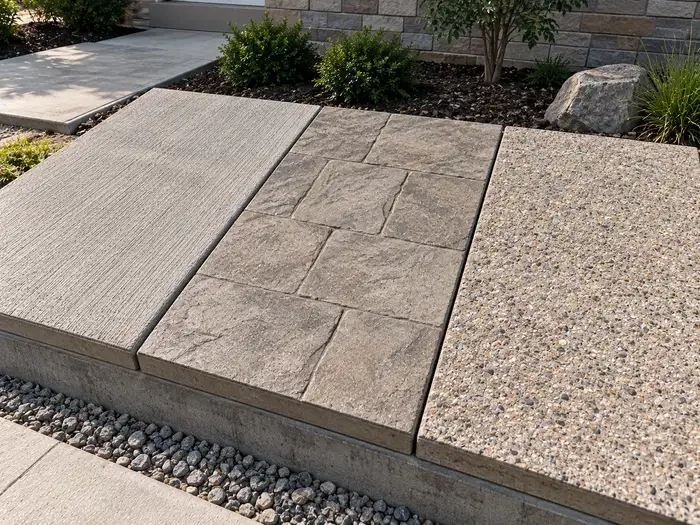
Stamped Concrete
Patterns can create the appearance of stone, brick, or other textures when offered as part of the contractor’s decorative services.
Colored Concrete
Color can be considered alone or with decorative patterning when appearance is a larger design priority.
Borders & Accents
Contrasting borders or decorative areas can visually define edges, entries, or transitions when included in the project scope.
Estimating
What Affects Concrete Driveway Cost in Columbus?
A reliable driveway quote depends on the actual scope. This page deliberately
avoids inventing a universal Columbus price because conditions, dimensions, removal
work, access, specifications, and finish choices can change the project significantly.
| Cost Factor | Why It Matters |
|---|---|
| Driveway dimensions | Area and geometry affect concrete quantity, forming, labor, and finishing. |
| Existing surface | Old concrete or asphalt may require demolition, loading, haul-away, and disposal. |
| Site access | Restricted access can change how equipment, materials, and crews reach the work area. |
| Subgrade and base work | Actual site conditions determine what preparation is required before placement. |
| Drainage or grading | Elevation changes and water-management work can add scope beyond basic placement. |
| Project specifications | Concrete properties, thickness, reinforcement, transitions, and related requirements vary by design. |
| Finish complexity | Decorative patterns, colors, borders, and specialty finishing can involve additional materials and labor. |
Want a Project-Specific Price?
Start with your project location, approximate dimensions and priorities. Confirm availability and estimate arrangements directly with the contractor.
Hiring Checklist
How to Compare Concrete Driveway Contractors in Columbus, Ohio
Comparable Driveway Experience
Ask to see completed projects similar in size, finish, access conditions, and replacement scope to your own driveway.
Clear Written Scope
Look for removal, preparation, materials, forms, project specifications, placement, finishing, curing guidance, cleanup, exclusions, and schedule assumptions.
Verifiable Trust Information
Verify insurance, applicable credentials, references, reviews, project evidence, written warranty terms, and who will actually perform the work.
Questions Worth Asking Before You Sign
- What exactly is included in demolition and haul-away?
- How will the site be graded and prepared?
- How will drainage be handled?
- What finish is included in the quote?
- How are joint locations planned?
- What curing and access instructions will be provided?
- What work is excluded from the proposal?
- How are changes documented and priced?
Homeowner Preparation
What to Expect Before, During, and After Driveway Installation
Before Work Begins
Plan for vehicle relocation, garage access, gates, landscaping, deliveries, pets, stored items, and any other conditions that may affect the work area.
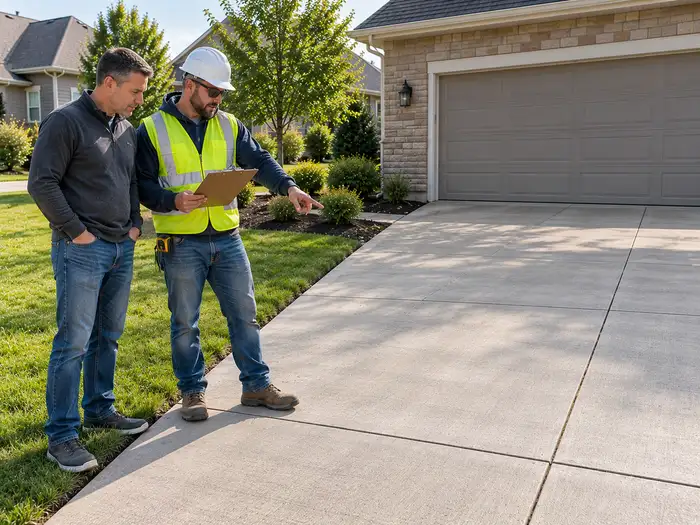
During Construction
Expect temporary disruption while demolition, preparation, forming, concrete placement, finishing, and cleanup are underway. Weather and site conditions can affect sequencing.
After Placement
Follow the contractor’s project-specific curing and access instructions. Keep all written care information, change documentation, and warranty terms provided at handoff.
Frequently Asked Questions
Concrete Driveway FAQs for Columbus Property Owners
Should I repair or replace my concrete driveway?
It depends on the extent of the damage, whether settlement or movement is continuing, drainage conditions, surface deterioration, and your long-term goals. Isolated damage can justify repair evaluation, while widespread or recurring problems may support replacement evaluation.
How long does concrete driveway installation take?
There is no single timeline for every project. Demolition, site preparation, access, driveway size, weather, project complexity, finishing, and curing requirements all influence the schedule. Ask for a project-specific sequence in writing.
When can I drive on a new concrete driveway?
Follow the instructions provided for the actual concrete installation. Vehicle access should be based on the project-specific curing and protection plan rather than a universal waiting period.
Will a concrete driveway crack?
Concrete can develop cracks because it changes volume and responds to loading, moisture, temperature, support conditions, and other factors. Preparation, drainage, joint planning, construction quality, and curing are among the topics that should be addressed during the project.
How does Ohio winter weather affect a concrete driveway?
Freeze-thaw exposure, moisture, snow and ice, and seasonal ground conditions are relevant durability considerations in Ohio. The appropriate concrete specifications and construction approach should be determined for the actual property and project.
What driveway finish should I choose?
A broom finish is a common practical exterior option. Decorative choices may include color, stamping, borders, or other treatments depending on contractor capability, budget, desired appearance, and maintenance expectations.
What should a concrete driveway estimate include?
A useful estimate should explain demolition or removal where needed, disposal, site preparation, forms, project specifications, concrete placement, finish, curing guidance, cleanup, exclusions, schedule assumptions, payment terms, and any warranty terms actually offered.
How do I compare concrete driveway contractors in Columbus?
Compare relevant driveway experience, real project evidence, written scope, communication, insurance and applicable credentials, reviews, references, warranty terms, and whether competing quotes cover the same work.
Next Step
Plan Your Concrete Driveway Project
Replace the placeholders below with your real business information and verified
estimate process. A site-specific assessment is the best way to turn the planning
topics on this page into an actual project scope.
Take the next step
A clearer brief. A more useful conversation.
Gather your project location, approximate dimensions, photos and priorities before speaking with a contractor.
project checklist
Before you approve a driveway proposal
Map your daily access
Identify where vehicles will park during removal, placement and curing. Include deliveries, garage access and any shared driveway arrangements. Ask for a plan for changes caused by weather, rather than assuming the driveway will reopen on a fixed day.
Check the edges of the scope
Make sure the proposal describes the garage connection, sidewalk crossing, street apron and lawn restoration. Ask which surfaces are being removed and how unexpected unsuitable material will be priced before additional work starts.
Compare the same driveway
Give each bidder the same dimensions and finish preferences. Compare removal, hauling, preparation, concrete specifications, joints, curing and cleanup together. A lower total may reflect an omitted item rather than a like-for-like saving.