
Home Concrete Projects • Columbus, Ohio
Residential Concrete Contractors Columbus Ohio: A Homeowner’s Guide to Choosing the Right Contractor
Residential concrete projects range from driveways and patios to walkways, steps and slabs. This guide helps homeowners define the project, compare repair and replacement, choose a finish, understand the general workflow, and evaluate contractor proposals without relying on unsupported promises.
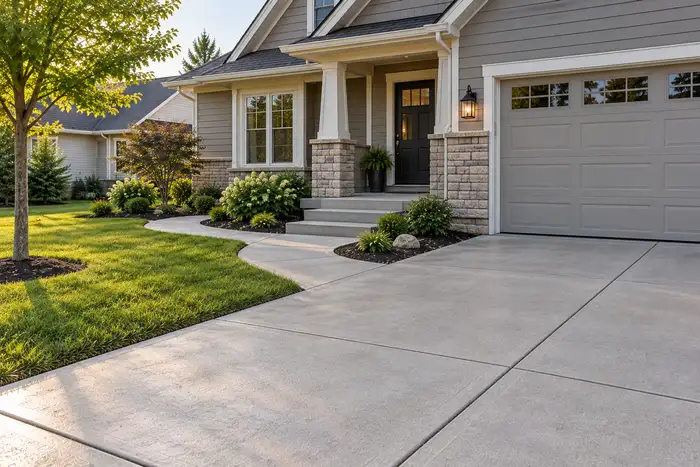
On this page 9 sections
- Common Residential Concrete Projects
- Should Existing Concrete Be Repaired or Replaced?
- Choosing a Concrete Finish for Your Home
- What to Expect During a Residential Concrete Project
- What Affects the Cost of a Residential Concrete Project?
- How to Compare Residential Concrete Contractors Columbus Ohio
- Residential Concrete Contractor FAQs
- Prepare for a Residential Concrete Estimate
- Prepare your home for a concrete project
Home Projects
Common Residential Concrete Projects
Driveways
A driveway project may involve a new installation, removal and replacement, or evaluation of existing cracking, settlement and surface deterioration. Vehicle use, garage transitions, drainage, site access, preparation, finish and joints all belong in the planning discussion. See the driveway guide →
Patios and Porches
Patios and porches connect the home with outdoor living areas. Layout should consider doors, steps, furniture, grilling, circulation, landscaping, drainage and finish. See the patio guide →
Walkways, Sidewalks and Steps
Residential access surfaces should be planned around transitions, grade, surrounding landscaping, drainage and how people move through the property. Public-right-of-way or accessibility requirements must be verified for the actual scope.
Garage and Basement Slabs
Slab projects may involve new work, replacement, repair or surface restoration. Intended use, loads, moisture, existing conditions, access and project specifications influence the correct approach.
Existing Concrete
Should Existing Concrete Be Repaired or Replaced?
Cracks do not automatically mean replacement, and a surface patch is not appropriate for every damaged slab. Evaluate the extent of damage, settlement, recurring movement, surface deterioration, drainage, function, previous repairs and long-term goals.
Repair May Be Worth Evaluating
Localized damage, a generally serviceable slab, correctable surface problems, or limited settlement may justify discussion of repair, leveling or resurfacing depending on the cause and condition.
Replacement May Be Worth Evaluating
Widespread deterioration, recurring movement, badly broken sections, major elevation or layout changes, or a project that requires broader reconstruction can shift the decision toward replacement.
For a deeper diagnostic framework, visit Concrete Repair & Resurfacing Columbus Ohio.
Appearance
Choosing a Concrete Finish for Your Home
Broom and Traditional Concrete Finishes
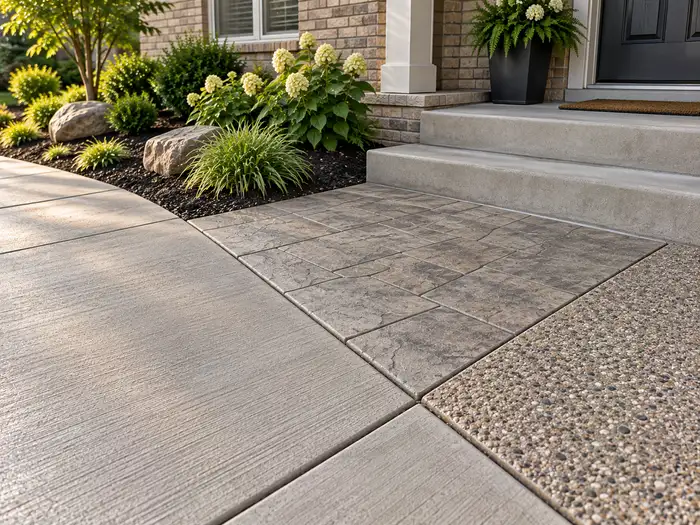
Broom-finished concrete creates a familiar textured exterior surface and can work with straightforward residential designs. Edge details, joints and layout still influence the finished appearance.
Stamped and Decorative Options
Stamped and colored systems add pattern and visual variation. Coordinate the finish with the home’s architecture, masonry, landscaping and surrounding hardscape. Explore stamped concrete →
Exposed Aggregate and Textured Surfaces
Exposed aggregate creates a distinct texture by revealing selected aggregate at the surface. Finish selection should consider appearance, intended use, surrounding materials and system-specific care.
Workflow
What to Expect During a Residential Concrete Project
Planning and Site Review
Define the project purpose, dimensions, existing conditions, access, drainage, transitions, finish and any removal or related work.
Site Preparation
Preparation varies by project and may involve demolition, excavation, grading, base work, protection of adjacent property and access planning.
Placement and Finishing
Concrete is placed and finished for the intended application. Decorative finishes require additional coordination and timing.
Curing, Cleanup and Final Review
Fresh concrete needs project-appropriate curing and protection. Cleanup, access instructions, care guidance and any written warranty should be reviewed at handoff.
Forming and Pre-Pour Details
Forms establish geometry and elevations. Project-specific reinforcement, joints, embedded items and transitions should be resolved before placement.
Budget
What Affects the Cost of a Residential Concrete Project?
Project Size and Geometry
Area, shape, curves, steps, edges and transitions influence quantities and labor.
Removal and Site Conditions
Existing concrete, excavation, grading, disposal, support conditions and drainage-related work can change the scope.
Access and Preparation
Restricted equipment access, landscaping protection, material movement and difficult site logistics can affect labor.
Finish and Related Details
Decorative complexity, borders, special transitions and other project-specific requirements can affect the estimate.
Compare written scopes rather than only totals. Unsupported local square-foot pricing can be misleading when the preparation and finish are different.
Contractor Comparison
How to Compare Residential Concrete Contractors Columbus Ohio
Look for Relevant Project Experience
Ask for genuine examples similar to your driveway, patio, walkway, steps or slab project. A broad gallery is less useful than comparable work with clear context.
Review the Scope, Estimate and Exclusions
Check demolition, preparation, forming, finish, cleanup, access, protection, related work, payment terms and exclusions so competing proposals are actually comparable.
Ask About Credentials and Responsibilities
Verify applicable business credentials, insurance, references, warranty wording and who is responsible for permits, inspections, utilities, site access and subcontracted work where relevant.
Compare Communication and Schedule Expectations
Ask how changes are documented, who your contact is, what can affect the schedule, when access is restricted and how project updates are handled.
FAQs
Residential Concrete Contractor FAQs
What should I include when requesting an estimate?
Provide the project type, approximate dimensions, photos, existing-surface condition, intended use, desired finish, access limitations, drainage concerns and whether removal or related work may be needed.
How long does a residential concrete project take?
Duration varies with project size, removal, preparation, access, weather, finish, curing and related work. Request a project-specific sequence rather than relying on a universal timeline.
How do I choose the right concrete finish?
Compare appearance, texture, intended use, surrounding architecture and landscaping, maintenance expectations and budget. Review real samples or genuine project examples when possible.
What should I ask a concrete contractor before hiring?
Ask about relevant experience, written scope, exclusions, preparation, finish, responsibilities, verified credentials, insurance, references, schedule assumptions, communication, cleanup and any written warranty actually offered.
Plan the Project
Prepare for a Residential Concrete Estimate
Gather the project location, dimensions, photos and priorities for a useful site-specific discussion.
Take the next step
A clearer brief. A more useful conversation.
Gather your project location, approximate dimensions, photos and priorities before speaking with a contractor.
project checklist
Prepare your home for a concrete project
Explain the whole route
Show the contractor how equipment can reach the work area, where materials might be staged and which gates or landscape features constrain access. Mention shared access and areas you want protected so those details can be included in the scope.
Plan household access
Discuss entrances, pets, children, deliveries and parking before work begins. Ask how the work area will be separated and how you will receive updates. Request project-specific instructions for walking, furniture placement and vehicle use.
Keep a simple project record
Save the accepted scope, finish selection, changes and care instructions together. At the walkthrough, compare completed work with the agreed scope and list outstanding items. Ask who to contact with questions after the work is finished.