
Outdoor Living • Columbus, Ohio
Concrete Patio Columbus Ohio: Plan a Durable Outdoor Living Space
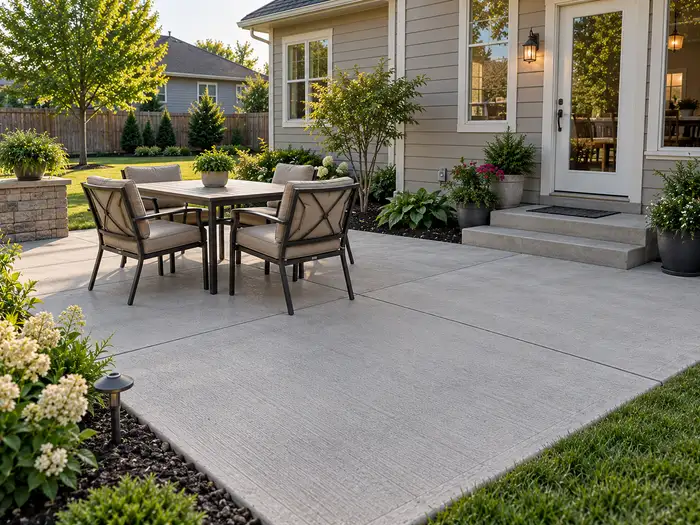
A useful patio starts with how the space will be used. Seating, dining, grilling, circulation, doors, steps, landscaping, drainage, access, and finish preferences all influence the project before concrete contract is placed.
On this page 9 sections
- Planning a Concrete Patio Around Your Space and Lifestyle
- Choosing the Right Concrete Finish
- What to Expect From Concrete Patio Columbus Ohio Installation
- What Affects the Cost of a Concrete Patio?
- What to Look for in Concrete Patio Contractors
- Caring for Your Concrete Patio
- Concrete Patio FAQs
- Plan Your Columbus Concrete Patio
- Test the layout before choosing the finish
Plan Around Real Use
Planning a Concrete Patio Around Your Space and Lifestyle
Start with function rather than finish. A patio intended mainly for a small table has different layout needs from a larger outdoor-living area with seating, a grill, planters, circulation paths, or future features.
Seating and Dining
Think about furniture dimensions, chair movement, walking routes, door swings, and how people will move between the house, yard, and patio.
Grilling and Outdoor Activities
Plan practical working space around grills or other movable equipment while keeping circulation clear. Permanent structures or utilities require their own project-specific planning.
Layout and Transitions
Consider how the patio meets doors, steps, walkways, lawns, landscaping, existing slabs, and other hardscape. These transitions affect both appearance and function.
Drainage and Site Conditions
Existing grade, downspouts, runoff, low areas, and adjacent structures should be evaluated before final elevations are established. Exact drainage requirements are site-specific.
Finish Selection
Choosing the Right Concrete Finish
Concrete Patio Broom Finish
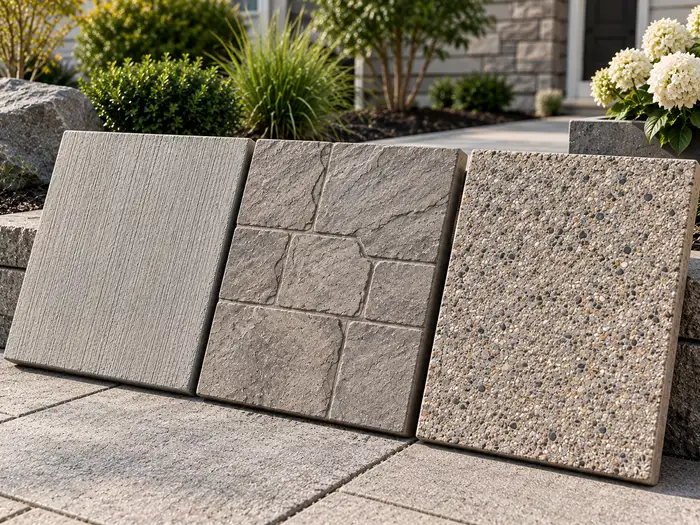
A broom finish creates a straightforward textured surface and is widely recognized as a practical exterior-concrete appearance. The final look depends on finishing technique, layout, joints, edges, and surrounding materials.
Stamped Concrete
Stamped concrete introduces pattern, texture, and color choices that can coordinate with architecture and landscaping. Decorative decisions should be made together rather than choosing a pattern in isolation. See our Stamped Concrete Columbus Ohio guide.
Exposed Aggregate
Exposed-aggregate finishes reveal selected aggregate at the surface and create a distinct textured appearance. Aggregate selection, exposure, finishing method, maintenance, and compatibility with the project should be discussed before installation.
Installation
What to Expect From Concrete Patio Columbus Ohio Installation
Project Review and Layout
Define intended use, approximate dimensions, shape, transitions, finish concept, access, surrounding landscaping, and any existing concrete that may need removal.
Site Preparation and Elevations
The area is prepared for the planned patio. Existing grade, support conditions, drainage, access, and transitions influence the preparation approach; exact specifications depend on the project.
Forms and Pre-Pour Planning
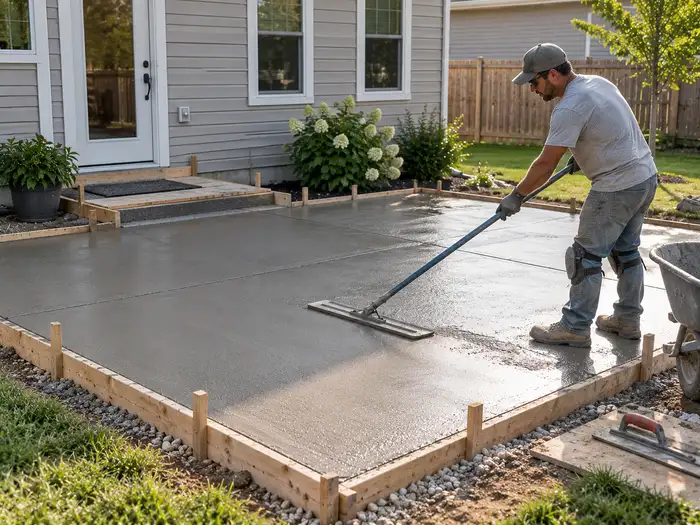
Forms establish the planned shape and elevations. Any project-specific reinforcement, joints, embedded items, or interfaces should be resolved before placement.
Placement and Finishing
Concrete is placed and finished according to the selected surface. Decorative finishes add their own timing and workmanship requirements.
Curing, Protection and Cleanup
Fresh concrete needs appropriate curing and protection. Exact access restrictions and curing instructions should follow the actual mix, weather, project specification, and contractor guidance.
Budget Planning
What Affects the Cost of a Concrete Patio?
A patio estimate should reflect the actual site and design. Publishing an unsupported local square-foot price can hide important differences between projects.
Size and Layout
Total area matters, but curves, corners, steps, borders, transitions, and complex geometry can also change labor and forming.
Removal and Preparation
Existing patio removal, excavation, grading, base preparation, access, disposal, and site protection can affect the scope before new concrete is placed.
Finish Selection
A straightforward finish and a multi-step decorative system do not carry the same finishing requirements. Pattern, color, borders, and detail work can change the scope.
Site Access and Related Work
Restricted access, landscaping, drainage corrections, utility coordination, adjacent work, or difficult material movement may influence the estimate.
Hiring
What to Look for in Concrete Patio Contractors
Relevant Patio Examples
Look for genuine patio projects showing layouts and finishes similar to what you are considering, not only unrelated concrete work.
Clear Written Scope
Compare what preparation, removal, finish, joints, cleanup, protection, exclusions, and related work are actually included.
Site-Specific Evaluation
A useful proposal should reflect access, elevations, drainage, transitions, existing conditions, and intended use rather than only patio square footage.
Verified Business Information
Verify applicable credentials, insurance, references, reviews, warranty language, contact information, and who will perform the work instead of relying on unverified website badges.
After Installation
Caring for Your Concrete Patio
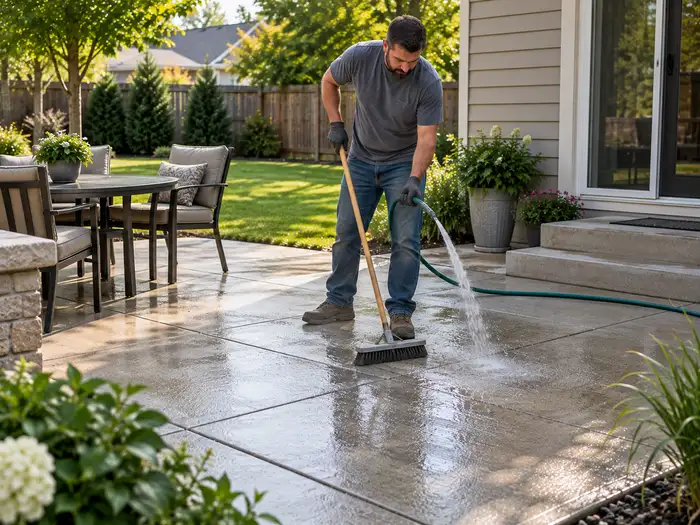
Keep the patio reasonably clean, pay attention to drainage and joints, and follow the actual contractor or product guidance for cleaning and surface protection. Decorative systems may have different care requirements from plain concrete.
Avoid assuming one universal sealing interval, cleaner, winter-maintenance method, or deicing recommendation applies to every patio. If cracks, movement, or surface deterioration develop later, evaluate the condition before choosing a repair product. Our Concrete Repair Columbus Ohio page explains the decision process.
FAQs
Concrete Patio FAQs
How thick should a concrete patio be?
Thickness should be determined from the intended use, site conditions, design requirements, and applicable specifications for the specific patio.
Which concrete finish is best for a patio?
There is no single best finish. Compare desired appearance, texture, surrounding materials, maintenance expectations, budget, and how the space will be used. Broom, stamped, and exposed-aggregate finishes create different results.
How long does patio installation take?
Project size, removal, preparation, access, weather, finish complexity, curing, and other site work affect scheduling. Ask for a project-specific sequence rather than relying on a universal duration.
Can an existing patio be replaced?
Existing concrete can be evaluated for removal and replacement when the layout, condition, elevation, movement, drainage, or project goals make a new installation preferable to repair or resurfacing.
Next Step
Plan Your Columbus Concrete Patio
A useful inquiry includes approximate dimensions, photos, intended use, finish preference, access information, and whether existing concrete must be removed.
Take the next step
A clearer brief. A more useful conversation.
Gather your project location, approximate dimensions, photos and priorities before speaking with a contractor.
project checklist
Test the layout before choosing the finish
Allow room to move
Mark the proposed patio footprint and place your furniture within it. Check the route from the door, space behind occupied chairs and the connection to the yard. Include planned additions in the discussion so the layout supports how you actually use the space.
Review a real finish sample
Compare texture and color beside the house and surrounding materials. Ask how the selected finish will feel underfoot and how it should be cleaned. A small online photograph cannot show every variation in a finished surface.
Define what happens around the patio
Ask whether excavation, removed soil, steps, lawn repair and changes to adjacent beds are included. Clarify drainage and door transitions during the site review, before the shape and finished elevation are agreed.