How Do Concrete Prices Work in Ohio and Columbus?
If you live in Columbus, your concrete faces a particular set of challenges. Clay soil shifts with moisture, winter brings repeated freezing and thawing, and road salt finds its way onto driveways and sidewalks for months each year. Those three factors shape how we plan a pour, how we prepare the base, and how we finish and cure the surface. They also shape pricing, because a slab built for Ohio conditions needs more care than a slab built for a mild climate.
We wrote this guide for homeowners in suburbs such as Dublin, Hilliard, Upper Arlington, Westerville, Gahanna, Grove City, and Reynoldsburg. You will learn why Ohio conditions matter, which project choices affect cost most, and how to use published planning ranges without treating them as quotes. We do not publish a fixed material price here, because material is only one part of a finished job. A written estimate for your address, access, and scope is the only figure that should guide a decision.
Why does Ohio clay soil change a concrete estimate?
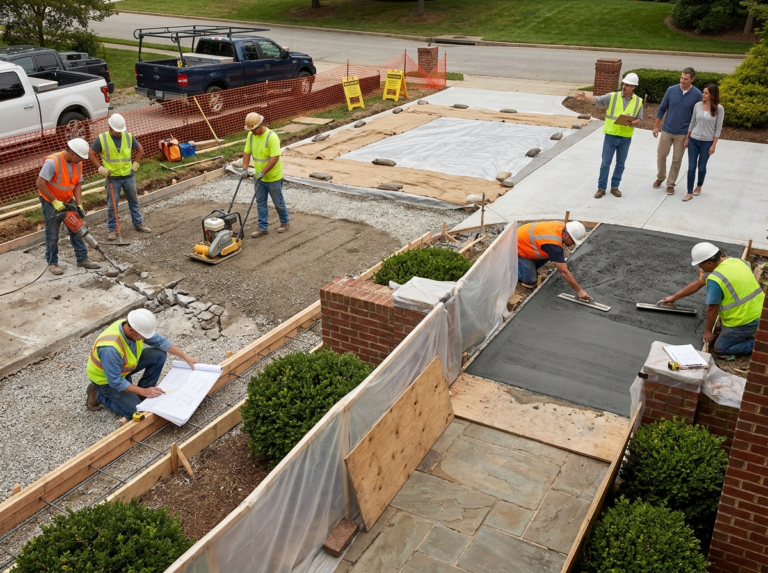
Central Ohio clay expands when it absorbs water and contracts as it dries. That movement can lift, settle, or crack a slab that sits on a weak or poorly drained base. A contractor who understands this will spend more time on grading, compaction, and drainage than a crew that treats every site the same. Stone base thickness, compaction effort, and the way water is directed away from the slab all matter, and they all take labor and material.
Soil conditions also vary by lot. One side of a street may drain well while the other holds water after rain. Downspouts, sump discharge, yard slope, and neighboring grades can push water toward a driveway or patio. When we walk a site, we look for those patterns before we talk about price. An estimate that ignores drainage may look attractive, yet it leaves the root cause untouched. That is a false saving, because water will keep working on the slab long after the crew leaves.
What makes a Columbus project cost more or less than a similar job elsewhere?
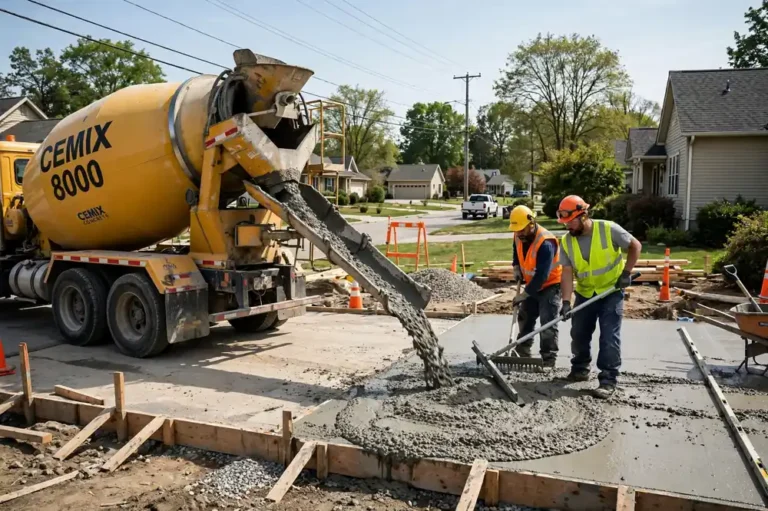
Access is a major local variable. Older neighborhoods near downtown and in Clintonville often have narrow side yards, fences, and mature trees that limit truck access. Newer subdivisions in Powell or Pickerington may offer open access but sit on lots with grading and drainage quirks of their own. Distance from the truck to the forms, slope, soft ground, and the need for a pump or extra labor all change the total.
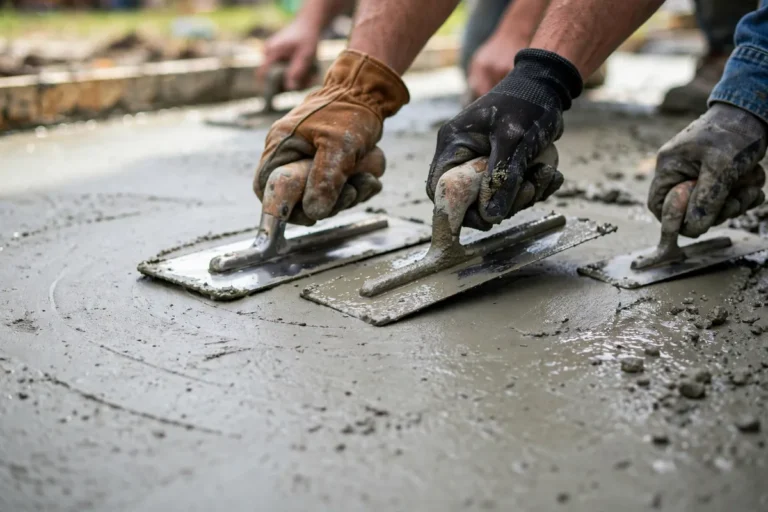
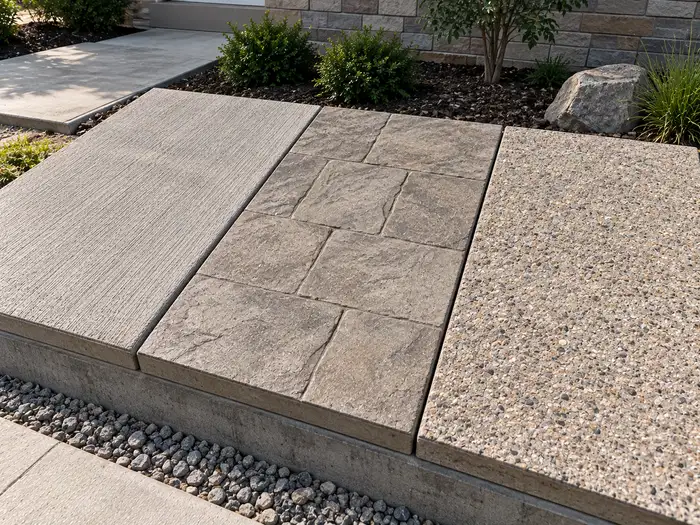
Removal and disposal also matter. Tearing out a thick old driveway, hauling broken concrete, and preparing a fresh base takes crew time and equipment. A project that reuses a sound base will differ from one that needs full excavation. Finish choice matters too. A plain broom finish, a decorative stamped finish, and an exposed aggregate finish each need different skills, steps, and curing care. Those differences are legitimate, and they should appear clearly in a written scope.
How should you use published price ranges for planning?
Published ranges help you sense-check an estimate, but they describe finished projects rather than material alone. For driveway and patio work, we use $6-12 per sq ft as a planning range that varies by project. Leveling work typically falls in a $500-3000 per job range. Resurfacing ranges from $3-10 per sq ft, stamped work from $8-18 per sq ft, and demolition from $1.20-1.90 per sq ft. Your written estimate will reflect your size, access, base condition, finish, and drainage needs.
Use those ranges as a starting conversation, not a verdict. If an estimate sits far outside a range, ask which factor explains the difference. Difficult access, extensive removal, a large area, or a decorative finish can all justify a higher figure. A missing scope item, such as base work, joints, or cleanup, can explain a figure that looks unusually low. Either answer helps you compare fairly, and a good contractor will welcome the question.
When is leveling or repair a better Ohio option than replacement?
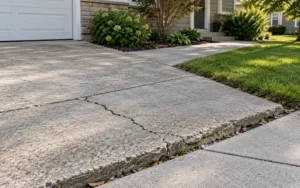
Ohio soil movement often settles a slab without destroying it. In that case, full replacement may be more than you need. Concrete leveling can raise a settled but sound slab and restore a safer, more even surface. Concrete repair can address cracking, joint damage, and surface wear when the underlying slab still has life left. Replacement makes sense when a slab is widely cracked, heaved, or broken beyond practical repair.
That choice affects cost in a useful way. Leveling and repair scopes use less material and less demolition than a full pour, and they can be completed with less disruption to your yard. They are not right for every slab, though. A slab with structural failure, severe heaving, or widespread breakup usually needs replacement. A site visit and an honest scope discussion will sort out which path fits, and that discussion should happen before anyone talks about a final number.
What should a written estimate for a Columbus home include?
A strong written estimate names the work in detail. Look for area and thickness, mix strength, base preparation, drainage plan, removal and disposal if any, finish type, joint layout, curing method, and cleanup. It should also name exclusions, such as landscape restoration beyond the immediate work area or additional work if hidden base failure appears after demolition. Vague language such as a single lump sum with no scope leaves too much room for misunderstanding.
Ask about timing and weather as well. Concrete needs suitable temperatures for placement and curing, and rain can delay a pour. A crew that explains its weather plan and its curing protection is planning for Columbus reality rather than an ideal forecast. Ask when you can walk on the surface, when you can drive on it, and how joints will be sealed or maintained. Those answers tell you a lot about long term care.
Where does the statewide picture fit into your local decision?
Ohio-wide guides are useful for understanding broad patterns, but Columbus lots, soils, and neighborhood access still decide your scope. A statewide average can hide the difference between an open suburban lot and a tight urban side yard. Use statewide context to understand why ranges vary, then rely on a written estimate for your property. That combination keeps you informed without anchoring you to a number that was never meant for your home.
Our 2026 cost guide gathers the published ranges and links to each detailed cost guide in this series. It is a good next step if you want to compare driveway pricing, per-square-foot pricing, per-yard drivers, and truckload considerations in one place. Start there, then return to the guide that matches your project type.
What is the next step for your Columbus project?
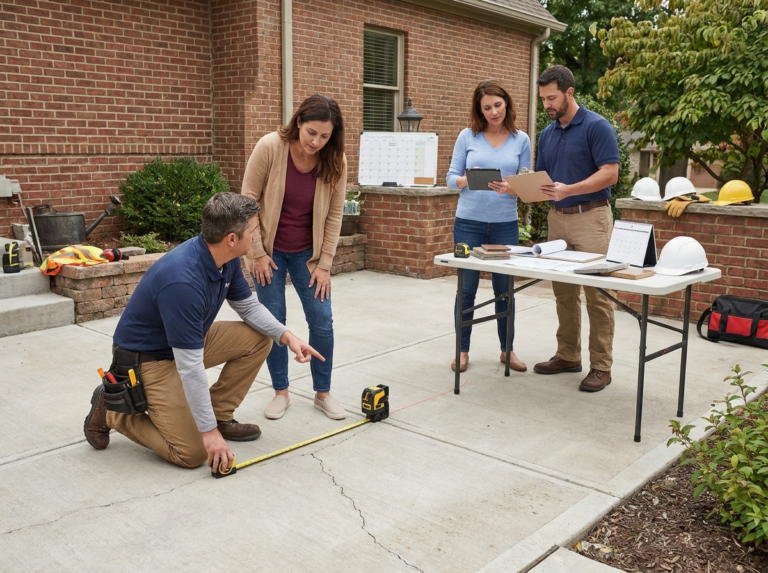
If you are planning a driveway, patio, sidewalk, or settled slab repair, start by noting your access, drainage patterns, and the problems you see today. Photos and measurements help a conversation, and a clear description of pooling water or cracking patterns helps even more. Then ask for a written estimate that names the scope we described above. Compare scopes first, and totals second.
When you are ready to talk through your project, request a free estimate. Tell us about your neighborhood, your surface, and your concerns about soil, drainage, or winter damage. We will help you compare leveling, repair, and replacement honestly, and we will put the scope in writing so you can decide with confidence. Ohio conditions reward careful preparation, and careful preparation starts with a clear conversation.