How Does Ordering a Truck of Concrete Affect Your Project Cost?
Concrete does not arrive in bags for a driveway, patio, or large walkway. It arrives by truck, mixed and ready to place, and the way you order that delivery shapes both cost and quality. Homeowners often ask about a truck of concrete cost as if it were a single retail price. In reality, the total depends on volume, mix, delivery access, placement method, and the crew time needed to finish the load before it sets.
We wrote this guide for Columbus homeowners in suburbs such as Dublin, Westerville, Upper Arlington, Worthington, Hilliard, Grove City, Gahanna, and Reynoldsburg. We use written-estimate language only here, with no truckload dollar figure, because your volume, mix, access, and scope decide the total. You will learn how ordering works, why small jobs cost more per yard, and which questions help you avoid waste, delays, and visible seams.
What does ordering by the truckload actually mean?
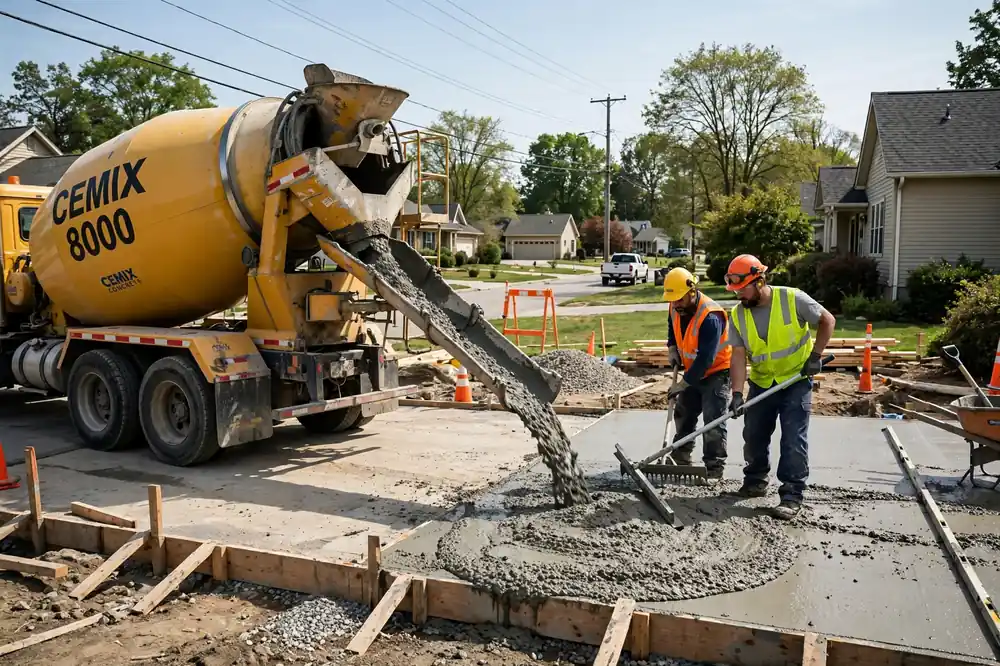
A truck carries a batch of ready-mixed concrete to your site, where a crew places, screeds, and finishes it. The order specifies volume, mix strength, aggregate, air content for exterior work, and any admixtures for setting time or workability. That specification matters, because a driveway mix, a walkway mix, and a decorative mix are not interchangeable, even when they arrive in similar trucks.
Timing matters as much as volume. Concrete begins setting soon after mixing, so placement and finishing must proceed efficiently once the truck arrives. A crew that has forms ready, base compacted, tools staged, and a pour sequence planned can use the load well. A crew that is still preparing forms when the truck arrives risks a rushed finish or a load that stiffens before placement is complete. Good ordering starts with good site readiness.
Why do small jobs often cost more per yard?
Fixed costs explain much of the difference. Delivery, truck time, crew mobilization, forming, and finishing setup occur whether a job uses a large volume or a small one. A large driveway spreads those fixed costs across many yards, while a small pad or short walkway section spreads the same fixed effort across far fewer yards. The result is a higher cost per yard for the small job, even though its total is smaller.
Minimum load considerations add to this effect. Suppliers plan truck capacity around efficient loads, and a very small order may still require a full truck trip, crew time, and scheduling effort. That does not mean a small job is a bad idea. It means budgeting should focus on the total written estimate and the scope, rather than judging a small job by a per-yard figure borrowed from a large pour. A small repair that restores safety or prevents further damage can be excellent value even when its per-yard figure looks high.
How does volume planning prevent waste and seams?
Accurate measurement is the first step. Crews measure length, width, and thickness, allow for irregular shapes, and add a modest waste allowance for spillage, uneven subgrade, and forming variations. Ordering too little creates a serious problem. A second load may arrive after the first portion has begun to set, which can leave a cold joint or visible seam. Ordering too much wastes material and adds disposal effort.
Pour sequencing helps as well. A crew plans where to start, how to move across the slab, where joints will fall, and how finishing will proceed behind placement. That sequence keeps the surface uniform and gives finishers time to work each section properly. When you discuss a project, ask how volume was calculated and how the pour will be sequenced. Clear answers suggest careful planning rather than guesswork.
How do delivery access and placement method affect the total?

Delivery access is one of the largest variables in truckload ordering. A truck that can back directly to the forms allows fast, straightforward placement. A site with a narrow gate, a fenced backyard, a steep slope, soft ground, or a long distance from street to forms needs another method. Wheelbarrows, a pump, a conveyor, or additional labor can bridge that distance, but each method adds time and crew effort.
Placement method also affects finish quality. Direct pouring is efficient when access allows it. Pumping can reach difficult areas and maintain a steady flow, which helps large or complex pours. Wheelbarrow placement works for smaller or tighter sites but takes more labor and time. Your written estimate should name the placement method planned for your site, because it explains part of the labor cost and helps you compare estimates fairly.
How does truckload ordering differ for leveling, repair, and replacement?
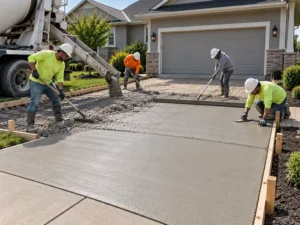
Not every concrete project orders a full truckload in the same way. A full driveway or patio replacement typically involves a larger pour, with volume, placement, and finishing planned as one coordinated effort. A repair may use a smaller volume and focus on a specific section, joint, or surface. Leveling often uses a different material and method entirely, because it lifts an existing slab rather than pouring a new one.
That distinction matters for budgeting. Comparing a leveling job to a full replacement on a per-yard basis would mislead you, because the scopes, materials, and labor differ. Concrete leveling and concrete repair each have their own planning logic, while concrete driveways covers full replacement scope. Reading the service page that matches your problem will help you ask about the right ordering approach for that work.
Where does truckload ordering fit into the broader cost picture?
Truckload ordering is one piece of a larger pricing puzzle. Per-yard drivers, per-square-foot finished rates, Ohio soil and weather factors, and driveway-specific scope all interact. Our 2026 cost guide gathers those pieces and links to each detailed guide, so you can see how ordering fits alongside material, labor, base work, and finish. That hub is a good next step if you want the full picture before you commit to a scope.
For a narrower question, our per-yard guide explains mix and volume drivers, while our per-square-foot guide explains finished-project budgeting. Together, those guides help you understand why a truckload total, a per-yard figure, and a finished-project rate can all describe the same job yet look different. Each figure answers a different question, and each is useful when its scope is clear.
What should you ask before delivery day?
Begin with volume, mix, access, and placement method. Ask how the crew calculated volume, which mix is specified, and how concrete will reach your forms. Ask about finishing, joints, curing, weather backup, and cleanup. Ask for those items in writing, so delivery day follows a plan rather than improvisation. A crew that welcomes those questions is usually a crew that plans carefully.
When you are ready to discuss your project, request a free estimate. Describe your surface, your access constraints, and whether you are considering leveling, repair, or replacement. We will talk through volume, mix, placement, and finishing in plain language, and we will put the scope in writing. Ordering concrete by the truckload works best when planning comes first, and planning starts with a clear conversation about your Columbus property.