
On this page 11 sections
- Welcome to Concrete Contractor Columbus
- Concrete Services for Columbus Properties
- Residential Concrete Installation and Replacement
- Commercial Concrete Services in Columbus
- Should You Repair or Replace Existing Concrete?
- How to Compare Concrete Contractors Columbus Ohio Property Owners Can Hire
- What to Expect During a Concrete Project
- What Affects the Cost of a Concrete Project?
- Concrete Finishes and Decorative Options
- Curing, Sealing, and Caring for Concrete
- Frequently Asked Questions About Concrete Work in Columbus
- Plan Your Columbus Concrete Project
Built around your property.
Understand the options. Ask better questions. Start with a clear scope.
Welcome To Concrete Contractor Columbus
People searching for concrete contractors columbus ohio often need more than a list of companies: they need to identify the right project approach, understand what a complete scope should cover, and compare providers on evidence rather than slogans. Residential and commercial projects can include driveways, patios, sidewalks, slabs, repair or replacement work, site concrete, and finish decisions, depending on what a contractor actually offers.
To define the project, compare written estimates, understand the typical work sequence, and ask better questions about preparation, materials, finishing, curing, access, cleanup, and maintenance. Because business capabilities, service areas, credentials, pricing, permits, and warranties vary, confirm those details directly with prospective contractors and the appropriate local authorities before committing to work.
services
Concrete Services For Columbus Properties
Find the right starting point for your project, from new concrete to evaluating an existing surface. Each guide explains planning decisions, cost factors and questions to discuss with a contractor.
01
Driveways
A better approach to your home.
Installation, replacement, drainage and everyday vehicle access.
Explore driveways
02
Patios
Make room for outdoor living.
Layouts, finishes and planning for dining, relaxing and gathering.
Explore patios
03
Stamped concrete
Bring texture to the details.
Compare patterns, colors, borders and decorative overlays.
Explore stamped concrete
04
Repair & resurfacing
Start with the cause.
Understand cracks, uneven slabs and surface deterioration.
Explore repair & resurfacing
05
Residential
Connect the spaces around home.
Plan walks, steps, driveways, patios and interior slabs together.
Explore residential
06
Commercial
Plan around the bigger picture.
Clarify scope, site logistics, bid documents and project handoff.
Explore commercial
residential
Residential Concrete Installation and Replacement
Your concrete should fit the way you use your home. Start with the practical need: more usable parking, a comfortable outdoor seating area, an easier path to the entrance or a slab that needs attention.
Review the connection between surfaces before treating each one as an isolated project. A driveway meets the garage, a walkway connects to steps, and a patio sits beside doors and landscaping. Include those transitions, drainage concerns and equipment access in the site visit.
01
Start with how you live.
Parking. Gathering. Walking. Working.
Let the use shape the project.
For garage and basement slabs, explain the intended use and any existing damage. Interior work can introduce different access, removal and finish considerations from exterior flatwork. Confirm that the contractor’s experience matches the actual scope.
commercial
Commercial Concrete Services in Columbus
Commercial concrete planning begins with scope, documents and the way a property operates. New construction, an occupied building and a phased exterior replacement each need a different conversation.
Slabs and foundations
Identify the drawings, specifications and design responsibilities for structural work, floors or equipment pads. Confirm relevant experience and clarify what is included before comparing proposals.
Site concrete and parking areas
Describe walks, ramps, curbs, parking surfaces and connections to existing pavement. Include circulation, deliveries and interfaces with other trades in the project brief.
Occupied-property work
Explain tenant access, business hours, shutdown limits and staging space. Ask bidders to describe phasing and temporary access arrangements so the proposal reflects operational needs.
repair replace
Should You Repair or Replace Existing Concrete?
Start by identifying the problem and its possible cause. Appearance alone does not establish the condition of a slab or the right treatment.
Targeted work
When to discuss repair
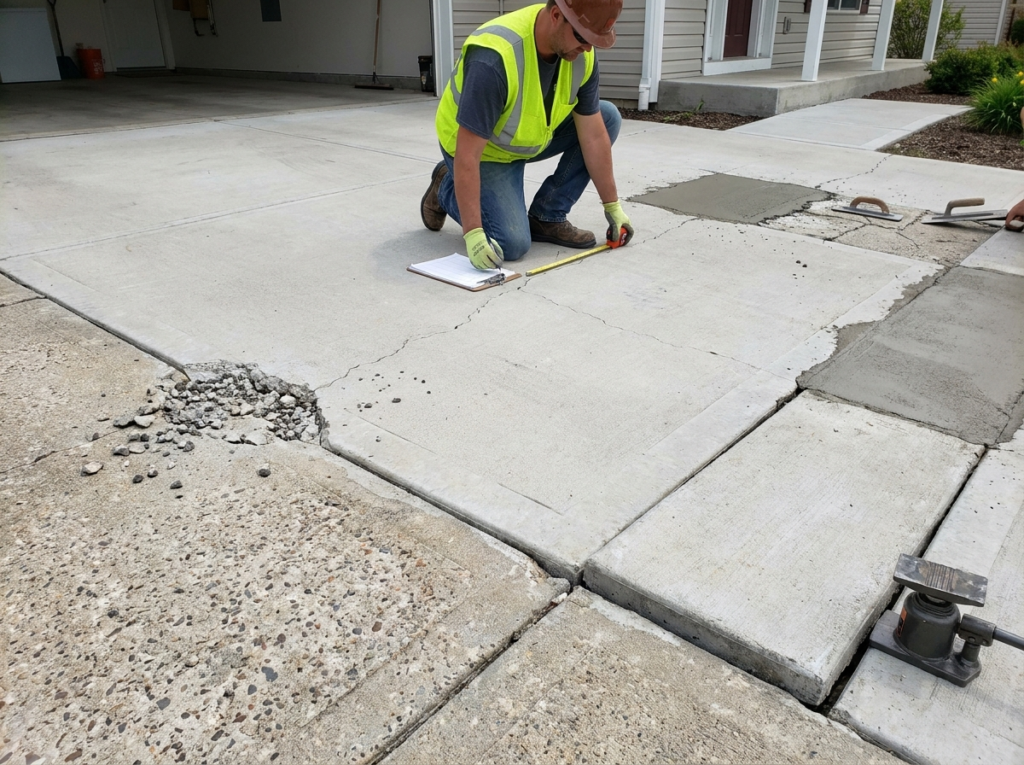
Localized damage may justify a repair evaluation where the surrounding concrete remains usable. Describe cracks, broken edges, worn areas or differences in elevation, and explain whether the problem has changed.
Ask what each method is meant to accomplish. Patching, lifting and resurfacing address different concerns; the proposed treatment should match the observed condition.
A broader solution
When to discuss replacement
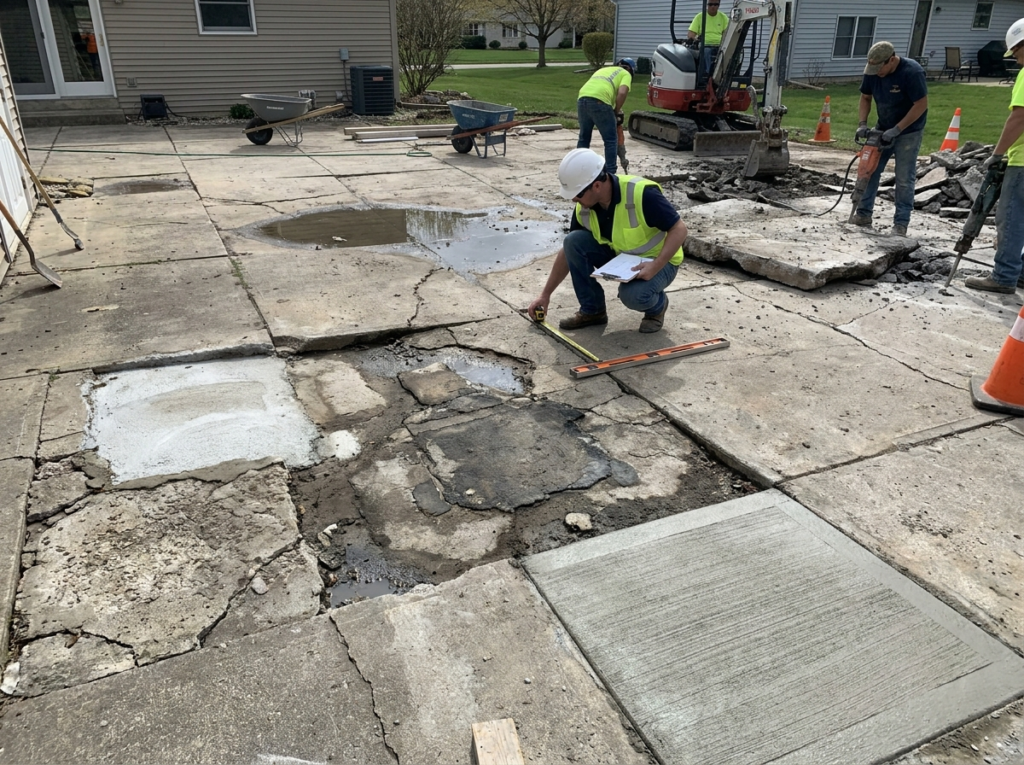
Widespread deterioration, recurring movement, an unsuitable layout or unresolved drainage may call for a broader review. Include prior repairs and the results of those repairs in the discussion.
Compare the extent of correction, disruption, finish expectations and limitations of each option. Ask what would remain unresolved if you choose a smaller repair.
choose
How to Compare Concrete Contractors Columbus Ohio Property Owners Can Hire
Compare written proposals for the same scope. A short quote and a detailed quote may include very different work, even when both describe the same finished area.
Relevant project evidence
Ask for completed examples similar to your project in size, use and finish. Read reviews for specific details about communication and project follow-through, and ask whether references are available.
A clear written scope
Look for removal, disposal, preparation, concrete specifications, finish, joints, curing and cleanup. Clarify exclusions and how unexpected conditions or changes will be approved and priced.
Defined responsibilities
Ask for current insurance information and applicable credentials. Clarify scheduling, payment terms, project contacts and any written warranty.
Use the same questions with each bidder. If one proposal includes restoration of adjacent landscaping or a different preparation allowance, have that difference explained before treating the totals as directly comparable.
process
What to Expect During a Concrete Project
Site review
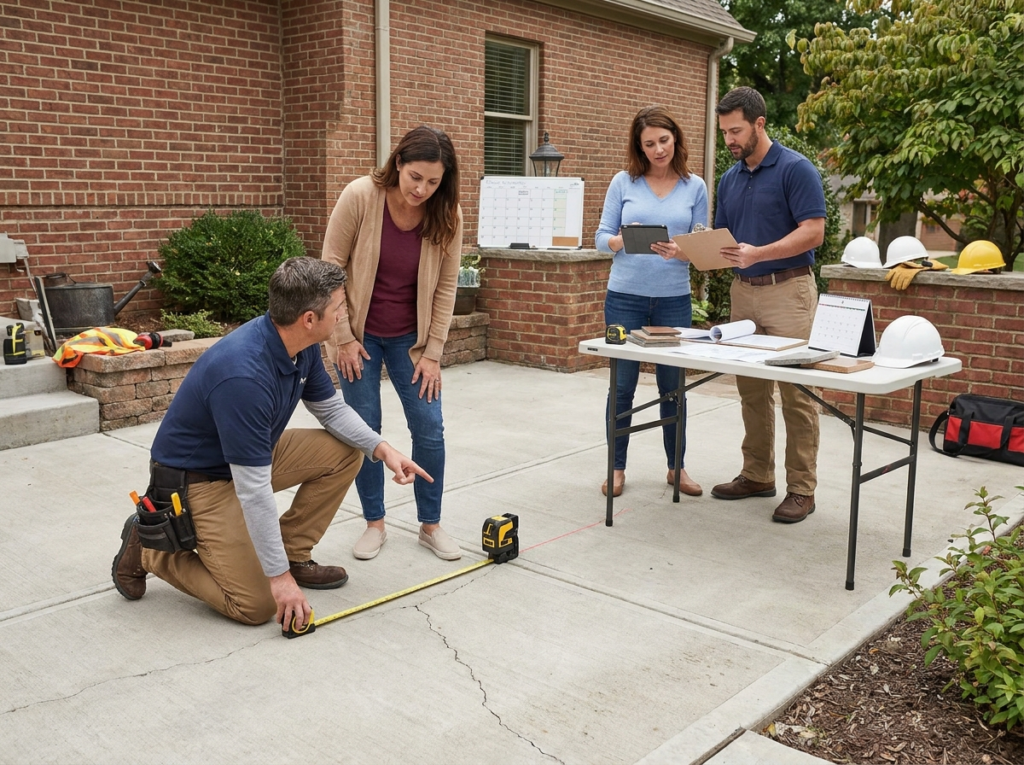
Measure the area, discuss intended use and review existing conditions. Point out access limits, water pooling, adjoining surfaces and features that need protection.
Scope and scheduling
Agree on the work, finish, exclusions and change process in writing. Discuss how weather and other dependencies may affect sequencing and who will provide updates.
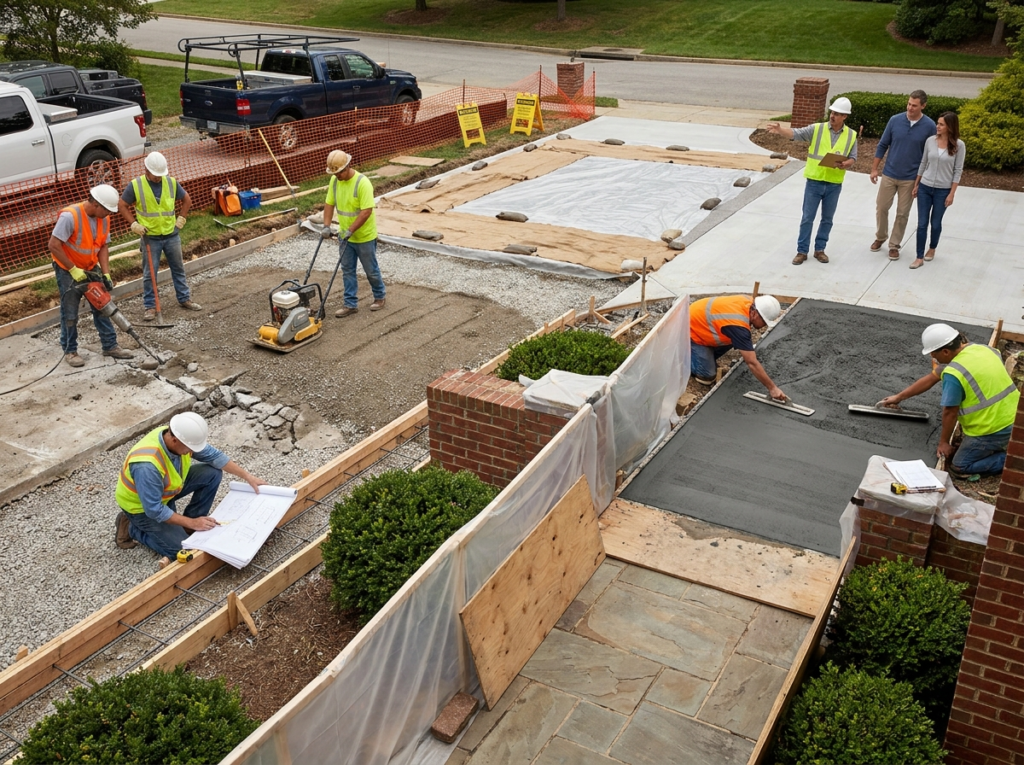
Preparation and placement
The scope may involve removal, excavation, preparation, forming and specified reinforcement before concrete is placed and finished. Ask how those stages will be checked against the agreed plan.
Protection and handoff
Follow the project-specific curing and access instructions. At the walkthrough, review cleanup, remaining work, care guidance and documents before closing out the project.
cost
What Affects the Cost of a Concrete Project?
A useful estimate reflects the actual property. Square footage helps describe the project, but it does not capture every part of the work.
| Cost factor | What to clarify in the quote |
|---|---|
| Size and design | Dimensions, shape, intended loads and project-specific specifications. |
| Removal and preparation | Existing-material demolition, hauling, excavation and how unknown conditions are handled. |
| Site access | Equipment access, staging, restricted areas and any special delivery arrangements. |
| Finish and detail | Texture, color, pattern, borders and transitions to adjoining surfaces. |
| Related work | Drainage changes, steps, adjacent restoration, testing or phased construction where applicable. |
Provide photos and approximate dimensions for an initial conversation, then ask what needs to be confirmed at a site visit. Request a written estimate for your property so the price reflects its specific scope and conditions.
finishes
Concrete Finishes and Decorative Options
Broom and traditional finishes
Start with intended use and surface texture. Ask to see examples and discuss cleaning, appearance and the transitions around the finished area.
Stamped and colored concrete
Patterns, colors and borders can change the character of an outdoor space. Compare samples with nearby materials and discuss pattern layout, joints and future care.
Exposed aggregate and other options
Discuss texture and appearance using actual examples. For interior floors, confirm whether specialized finishes such as polishing fit the project and the contractor’s capabilities.
care
Curing, Sealing, and Caring for Concrete
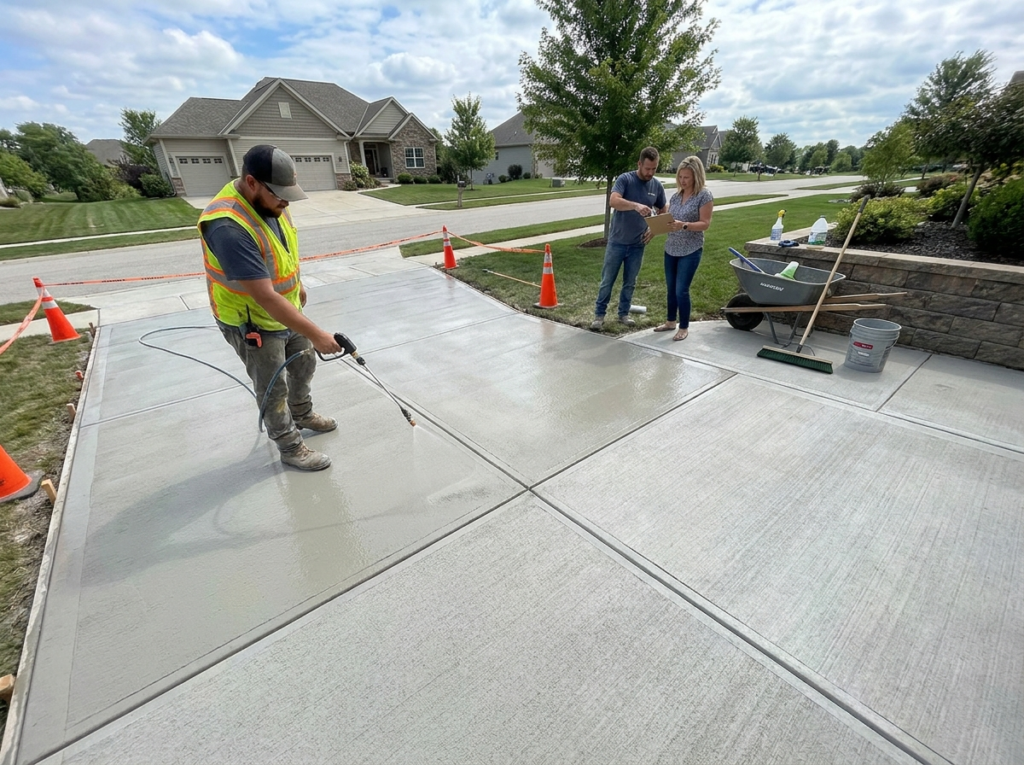
Before work finishes, request written instructions for protecting and using the new surface. Walking, placing furniture and driving may involve different restrictions. Follow the instructions for the installed materials and conditions instead of relying on one universal waiting period. Ask which cleaning products and methods suit the finish, whether sealing is appropriate, and how to recognize when attention is needed. Keep the product information with your project records. There is no single sealing schedule that this research establishes for every concrete surface.
Watch for changing cracks, damaged joints or water collecting in new places. Share those observations with a qualified contractor so the condition can be assessed rather than covered over without explanation.
faq
Frequently Asked Questions About Concrete Work in Columbus
What should I include when asking for an estimate?
Share the project location, approximate dimensions, current surface, photos, desired use and finish preferences. Mention access restrictions, target timing and any drainage or damage concerns. For commercial work, include the current plans and specifications where available.
How long does a concrete project take?
The duration depends on scope, preparation, access, sequencing and conditions. Ask the contractor to distinguish active construction from curing and restricted use, and to explain how schedule changes will be communicated.
Can damaged concrete be resurfaced?
Resurfacing deserves evaluation when an existing slab may be suitable for a new surface treatment. Ask about preparation, the condition of the underlying slab and what the proposed system will not address. Repair, lifting and replacement are different options.
Who handles permits and approvals?
Ask the contractor to identify the approval questions for your location and scope and record responsibility in the proposal. Confirm project-specific requirements with the relevant authority before work begins.
How should I prepare before work begins?
Agree on parking, entrances, deliveries, pets, equipment access and areas needing protection. Confirm which clearing and removal tasks belong to you and which are included in the contractor’s scope.
Are decorative options available for every project?
Availability and suitability depend on the contractor, project and existing conditions. Ask for relevant examples and samples, and clarify installation and maintenance expectations before choosing a pattern or finish.
conclusion
Plan Your Columbus Concrete Project
Turn your ideas into a brief you can use when speaking with contractors. Record the essentials, compare the options and keep your project priorities in one place.
Take the next step
A clearer brief. A more useful conversation.
Gather your project location, approximate dimensions, photos and priorities before speaking with a contractor.