
Commercial Procurement • Columbus, Ohio
Commercial Concrete Contractors Columbus Ohio: Planning and Choosing the Right Project Partner
Commercial buyers need more than a list of concrete services. General contractors, owners, developers and facility managers need to understand scope capability, project fit, logistics, documentation, quality requirements, bid clarity and how concrete work will coordinate with the wider construction schedule.
On this page 15 sections
- Common Types of Commercial Concrete Work
- Commercial Project Types and Contractor Fit
- Preconstruction Planning for Commercial Concrete
- Site Preparation, Access, and Jobsite Logistics
- How Commercial Concrete Work Moves From Forming to Completion
- Quality Control, Testing, and Project Documentation
- Accessibility Considerations for Commercial Concrete
- Repair or Replace? Evaluating Existing Commercial Concrete
- What Affects Commercial Concrete Project Cost?
- What to Include in a Commercial Concrete Bid Request
- How to Compare Commercial Concrete Contractors Columbus Ohio
- What to Expect From Proposal Through Project Closeout
- Commercial Concrete Contractor FAQs
- Prepare a Commercial Concrete Proposal Request
- Make commercial bids easier to compare
Commercial Planning
Common Types of Commercial Concrete Work
Footings, Foundations, and Walls
Commercial concrete can include structural and support-related scopes defined by project drawings and specifications. Footings, foundation walls and related structural work require close coordination with design documents, excavation, reinforcing details, embeds, inspections and other trades. A contractor proposal should identify the exact scope boundaries instead of relying on a broad “foundation” label.
Slabs, Floors, and Equipment Pads
Slabs may serve warehouses, offices, retail spaces, multifamily projects, service areas or equipment locations. The intended use can affect project requirements for preparation, reinforcement, embeds, finishing, joints, flatness or levelness, curing and protection. Exact technical criteria must come from the governing project documents.
Site Concrete, Walks, Ramps, and Exterior Flatwork
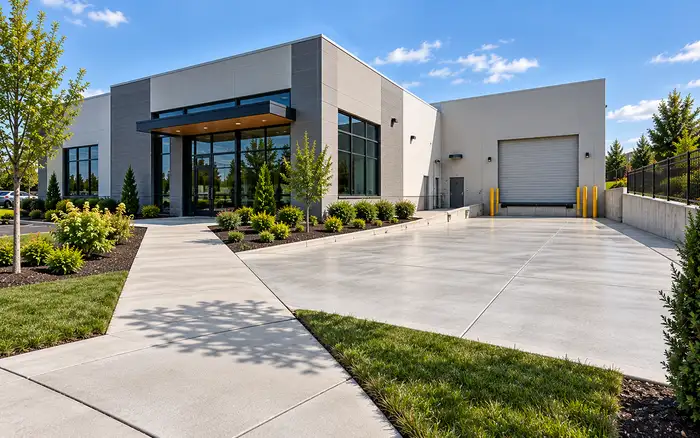
Exterior commercial work can include sidewalks, approaches, curbs, ramps, pads, parking-related flatwork and other site elements. These areas often interface with civil grading, drainage, utilities, landscaping, paving and accessible routes, making coordination as important as placement.
Commercial Concrete Repair and Replacement
Existing facilities may need selective removal, slab replacement, surface repair, joint work, leveling or other restoration. The first decision is whether the visible problem is localized or connected to settlement, support, drainage, loading or broader deterioration.
Commercial Planning
Commercial Project Types and Contractor Fit
New Construction and Building Expansion
New construction typically places concrete within a larger sequence involving earthwork, utilities, structural trades, building systems and site work. Contractor fit depends on the actual package, schedule, crew and equipment requirements, documentation, coordination and project specifications.
Existing Commercial and Occupied Properties
Work at active properties adds operational constraints. Pedestrian routes, tenant access, deliveries, parking, noise, dust, temporary barriers, shutdown windows and protection of existing finishes can affect how the concrete scope is phased.
Industrial, Retail, Office, and Multifamily Environments
Different markets create different operating and coordination demands. Instead of assuming a contractor is equally suited to every sector, ask for verified examples that match the project environment, scope and scale.
Commercial Planning
Preconstruction Planning for Commercial Concrete
Reviewing Plans, Specifications, and Scope Boundaries
Before pricing, bidders need the latest drawings, specifications, addenda and a clear understanding of what belongs in their package. Clarify demolition, excavation, base work, reinforcement, embeds, forming, pumping, placement, finishing, curing, testing support, cleanup and protection.
Coordinating Schedule and Other Trades
Concrete work often depends on preceding work and creates prerequisites for following trades. Discuss required dates, predecessor activities, inspection points, material lead times, pour sequencing and when areas can be released for subsequent work.
Identifying Site and Operational Constraints Early
Limited staging, restricted truck access, overhead obstructions, occupied areas, security procedures, working-hour restrictions and temporary access requirements can materially change execution.
Commercial Planning
Site Preparation, Access, and Jobsite Logistics
Demolition, Excavation, and Base Preparation
A bid should state who owns removal, disposal, excavation, grading and preparation. Existing conditions can be uncertain, so proposals should explain assumptions and how concealed or differing conditions will be handled.
Concrete Truck Access and Material Flow
Placement planning should consider truck routes, staging, pumping or other material movement, washout arrangements, traffic control and protection of completed work. The correct approach depends on the site.
Phasing Work Around Active Operations
Commercial owners may need to preserve entrances, parking, loading, tenant access or production. Phasing can reduce disruption but may add mobilizations, temporary protection and sequencing complexity.
Commercial Planning
How Commercial Concrete Work Moves From Forming to Completion
Forming and Reinforcement
Forms establish geometry and elevations, while reinforcement and embeds follow project requirements. The concrete contractor should work from approved documents and coordinate questions before placement.
Placement, Finishing, and Joints
Placement method, finishing and joint requirements vary by slab or site element. Weather, access, pour size, crew planning and downstream floor or coating requirements can influence execution.
Curing, Protection, and Turnover
Fresh concrete requires project-appropriate curing and protection. Traffic, other trades, weather and construction activity can damage work before turnover, so responsibility for protection and access should be explicit.
Commercial Planning
Quality Control, Testing, and Project Documentation
Meeting Project Specifications and Tolerances
Commercial projects can contain detailed requirements for materials, dimensions, elevations, finishes and tolerances. The contractor should identify applicable requirements from the project documents and raise conflicts or unclear details through the project communication process.
Inspections and Testing
Testing and inspection responsibilities vary. Bid documents should clarify who schedules or provides testing, what notifications are required, what records are needed and how nonconforming results are addressed.
Tracking Deficiencies and Closeout Records
Punch-list items, repairs, cleanup, test reports, warranties, product information and other closeout records may be required before final acceptance. Define documentation expectations before construction rather than at the end.
Commercial Planning
Accessibility Considerations for Commercial Concrete
Accessible Routes, Ramps, and Walkways
Commercial exterior concrete may form part of an accessible route. Slopes, transitions, landings, curb ramps and related details are compliance-sensitive and must follow the applicable project documents and authority requirements rather than generic website measurements.
Coordinating Requirements With Project Documents
The safest procurement approach is to identify accessibility-related details in the drawings and specifications, resolve conflicts with the design team, and confirm inspection responsibilities. A contractor website should not substitute for project-specific design or code review.
Commercial Planning
Repair or Replace? Evaluating Existing Commercial Concrete
Condition, Settlement, and Surface Damage
Document cracking, spalling, joint failure, settlement, ponding, broken edges and previous repairs. Localized damage may support a targeted repair, while widespread deterioration or movement may justify broader replacement.
Operational and Structural Requirements
The decision also depends on loads, traffic, equipment, drainage, accessibility, shutdown limits and long-term facility plans. Repair and replacement alternatives should be compared against the actual operational objective.
Commercial Planning
What Affects Commercial Concrete Project Cost?
Quantities, Demolition, and Site Conditions
Concrete quantities are only one part of price. Removal, disposal, excavation, unknown existing conditions, grading and preparation can materially affect labor and equipment.
Reinforcement, Formwork, and Finish Requirements
Complex forms, reinforcement, embeds, edges, specialty finishes and tight interfaces increase coordination and labor compared with straightforward flatwork.
Access, Phasing, Testing, and Schedule
Restricted access, multiple mobilizations, off-hours work, testing support, protection, accelerated sequencing and active-facility constraints can change cost even when concrete quantity is similar.
Commercial Planning
What to Include in a Commercial Concrete Bid Request
Plans, Specifications, and Scope Details
Provide current drawings, specifications, addenda, bid forms and a concise scope narrative. Identify alternates, allowances, unit prices or exclusions you want separated.
Schedule, Access, and Bid Deadlines
State the bid due date, anticipated construction window, milestone dates, working-hour restrictions, site access, walkthrough information and known phasing requirements.
Proposal Format, Alternates, and Contact Information
Tell bidders how proposals should be organized and who receives questions. A consistent format makes it easier to compare inclusions, exclusions, alternates, qualifications and schedule assumptions.
Commercial Planning
How to Compare Commercial Concrete Contractors Columbus Ohio
Relevant Commercial Project Experience
Ask for verified projects comparable in scope, size, environment and complexity. A residential portfolio or unrelated project does not demonstrate commercial fit by itself.
Credentials, Insurance, and Safety Information
Request the credentials, insurance, bonding or safety information actually required by your organization or contract documents, and verify it directly. Requirements vary by project.
Proposal Clarity and Scope Alignment
The strongest comparison is not simply the lowest total. Check that bidders priced the same drawings, addenda, quantities, preparation, finishes, testing support, protection, cleanup and schedule assumptions.
Communication, Scheduling, and Documentation
Clarify who manages the project, how submittals and RFIs are handled, how schedule updates are communicated, how changes are documented and what closeout records will be provided.
Commercial Planning
What to Expect From Proposal Through Project Closeout
Scope Review and Proposal
A commercial proposal should identify the basis of bid, inclusions, exclusions, alternates, assumptions and schedule considerations. Open questions should be resolved before award where possible.
Scheduling, Mobilization, and Construction
After award, the concrete scope is coordinated with the overall project schedule, submittals, site access, inspections and predecessor work. Mobilization and placement sequencing should match approved plans and field conditions.
Punch List, Cleanup, and Handoff
At completion, remaining deficiencies are documented and resolved, work areas are cleaned, required records are assembled and the scope is handed off according to the contract.
FAQs
Commercial Concrete Contractor FAQs
What information does a contractor need to price a commercial concrete project?
Provide current drawings, specifications, addenda, scope narrative, bid form, schedule, access constraints, alternates, site information, walkthrough details and a clear contact for questions. Better bid information reduces assumptions and makes proposals easier to compare.
How early should concrete work be planned?
Planning should begin early enough to resolve scope boundaries, submittals, access, predecessor work, inspections, material requirements and schedule interfaces before concrete activities become critical. The appropriate lead time depends on the project.
Who handles permits and inspections?
Responsibility depends on the contract, project type and authority having jurisdiction. The bid and contract documents should identify who obtains permits, requests inspections, coordinates testing and provides required records. Do not assume one universal Columbus process.
What qualifications should a commercial concrete contractor provide?
Request qualifications relevant to your procurement requirements: comparable project experience, verified business credentials, insurance, bonding if required, safety information, references, staffing, equipment, schedule capability and documentation practices.
Can commercial concrete work be phased around business operations?
Many projects can be evaluated for phasing, but feasibility depends on access, safety, concrete sequencing, temporary routes, curing and protection, business operations and the wider construction schedule. Define required operational continuity in the bid documents.
Procurement
Prepare a Commercial Concrete Proposal Request
A commercial inquiry should identify project type, location, bid deadline, anticipated schedule, drawings/specifications, scope and the best contact for follow-up.
Take the next step
A clearer brief. A more useful conversation.
Gather your project location, approximate dimensions, photos and priorities before speaking with a contractor.
project checklist
Make commercial bids easier to compare
Issue one coordinated package
Identify the drawing revision, specifications, scope boundaries, quantities where available and bid deadline. List alternates separately and ask each bidder to state assumptions and exclusions. Share clarifications consistently so bids address the same work.
Separate construction from operations
Document delivery windows, pedestrian routes, tenant access, shutdown limits and storage areas. Ask for proposed phasing and the party responsible for each temporary arrangement. Review these assumptions with the site team before accepting the schedule.
Define the handoff
Agree on required testing records, inspection coordination, deficiency review and closeout documents in the scope. Assign responsibility for reviewing each item and resolving open issues. Record changes in writing so the final handoff reflects what was actually agreed.