What Determines the Price of Concrete Per Square Foot?
When you are planning a driveway, patio, or walkway, per-square-foot pricing feels intuitive. You measure an area, multiply by a rate, and arrive at a budget. In practice, that simple math hides important choices. Thickness, base work, removal, finish, drainage, and access all sit inside the finished rate, and they vary from one Columbus property to another. We wrote this guide to explain what a per-square-foot figure actually covers, so you can compare estimates fairly.
We work across Columbus suburbs such as Dublin, Westerville, Upper Arlington, Worthington, Hilliard, Grove City, and Gahanna. In each area we see the same pattern. Homeowners who understand scope compare quotes with confidence, while homeowners who compare only a single rate can miss a major difference in base work or finish. This guide keeps the focus on scope, and it uses only published planning ranges, never a fixed quote for an unseen job.
What do our published ranges actually cover?
For planning, we use driveway and patio work at $6-12 per sq ft as a range that varies by project. Resurfacing ranges from $3-10 per sq ft, stamped work from $8-18 per sq ft, and demolition from $1.20-1.90 per sq ft. Leveling work is different, because it is priced per job rather than per square foot, typically in a $500-3000 per job range. These figures are planning ranges drawn from our published guides, not promises for your property.
Each range assumes a typical scope, yet typical covers a lot of ground. A simple broom-finished driveway with good access sits differently from a stamped patio with steps, curves, and drainage work. When an estimate lands inside a range, check which scope items explain its position. When an estimate lands outside a range, ask why before you accept or reject it. The explanation matters more than the position.
How does project size change the per-square-foot rate?
Size affects cost in two directions at once. Larger pours spread fixed costs, such as delivery, crew mobilization, forming setup, and equipment, across more square feet. That spreading effect can bring the rate down for a big driveway compared with a tiny pad. Smaller jobs carry the same fixed effort across fewer square feet, so their rate often looks higher even though the total is smaller.
Shape matters as well as size. A simple rectangle is faster to form and finish than a curved patio with steps, borders, or multiple levels. Curves need more forming labor, more cutting, and more finishing care. Irregular shapes also create more waste and more joint planning. If your project has curves or steps, expect the scope discussion to focus on forming and finishing time, because those steps drive labor more than raw area does.
How do base preparation and drainage affect the rate?
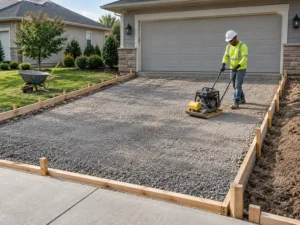
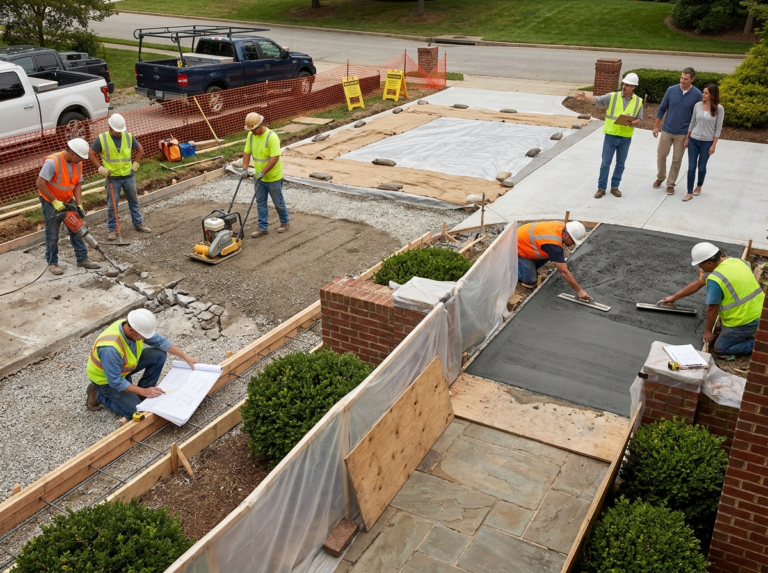
Base preparation is the work you cannot see once a slab is poured, yet it decides how long that slab lasts. In Columbus, clay soil and freeze-thaw cycles make this step especially important. A compacted stone base, proper thickness, and grading that moves water away from the slab all protect against settling and cracking. Skipping base work may lower a rate, but it raises the risk of early failure.
Drainage deserves its own question in every estimate. Where will water go after rain, and where will it go when snow melts? Will the new surface direct water away from your foundation, garage, and walkways? A crew that grades thoughtfully and plans joints and slopes carefully is building for Ohio winters, not just for pour day. Ask for the drainage plan in writing, because it is easy to overlook and expensive to fix later.
How do removal, thickness, and reinforcement change the figure?
Removing old concrete adds labor, hauling, and disposal. A thick old driveway or a slab with embedded reinforcement takes longer to break out than a thin walkway. If removal is included in your rate, confirm it. If it is excluded, your comparison with another estimate may be unfair, because one quote includes a major cost that the other leaves out.
Thickness and reinforcement also shape durability and cost. Driveways that carry vehicles need adequate thickness and joint spacing, while patios and walkways carry lighter loads. Reinforcement type, joint layout, and curing method should be named in the scope. When two estimates differ, those named items often explain the gap. A lower rate that omits reinforcement or proper joints is not the same product as a higher rate that includes them.
How do finish choices move the rate up or down?
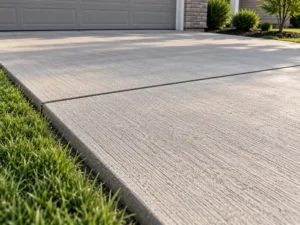
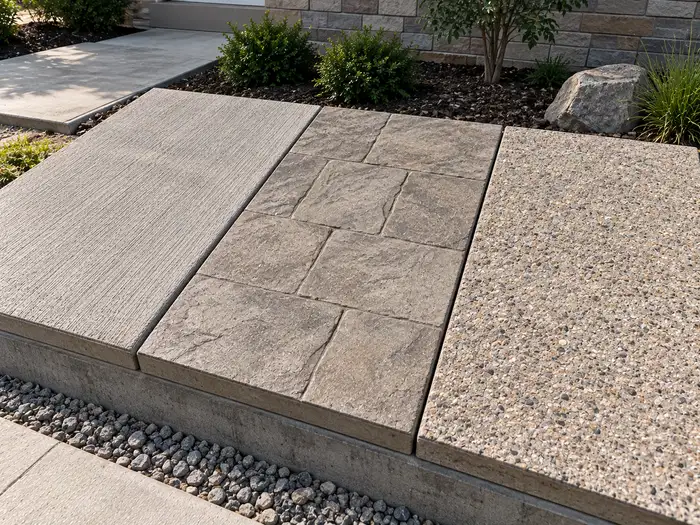
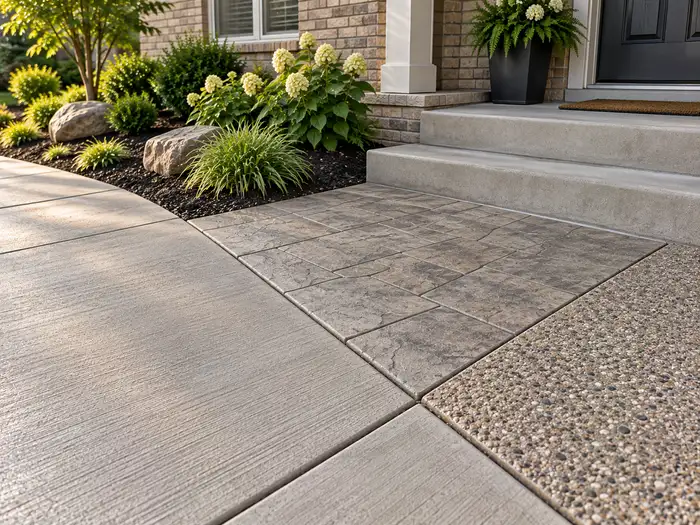
Finish is where appearance and function meet. A broom finish gives grip and suits many driveways and sidewalks. A smoother finish suits some patios but can be slippery when wet. Stamped finishes mimic stone or brick and require coloring, stamping, and sealing steps. Exposed aggregate finishes reveal stone texture and need careful washing and sealing. Each finish needs different labor, skill, and curing care, so each affects the finished rate.
Sealing is part of that conversation for many finishes. A sealer can protect a sound surface from salt, stains, and freeze-thaw damage, but it is maintenance rather than a cure for a failing slab. Ask whether sealing is included, what product type is planned, and when it should be reapplied. Clear answers help you budget beyond pour day and keep the surface looking good through Columbus seasons.
Which service scope fits your project?
Not every concrete need is a new pour, and the right scope can change your budget significantly. If a slab has settled but remains sound, concrete leveling may restore it without full replacement. If cracking or surface wear is the main problem, concrete repair may be the practical path. If a driveway is at the end of its life, our concrete driveways scope covers a full replacement with proper base, drainage, and finish.
Our 2026 cost guide gathers these options and links to companion guides on per-yard drivers, Ohio pricing, driveway pricing, truckload considerations, and choosing a contractor. That hub is a good place to compare project types before you settle on a scope. It also helps you see why a leveling job is priced per job while a new driveway is often discussed per square foot.
What is the smartest next step before you commit?
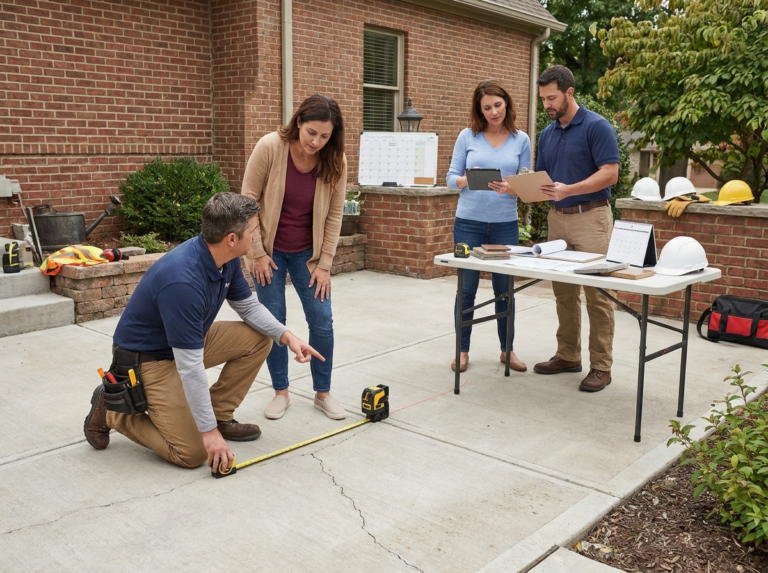
Measure your area, note access constraints, and photograph drainage patterns, cracks, and pooling water. Those details help any contractor give you a realistic written estimate. Then ask for scope in writing, with thickness, base, drainage, finish, joints, curing, and cleanup all named. Compare those scopes first, and let the rate follow the scope rather than lead it.
When you are ready, request a free estimate and describe your driveway, patio, or walkway, including size, access, and finish ideas. We will talk through the scope in plain language and put it in writing, so the per-square-foot figure you receive reflects your property rather than a generic average. A careful scope today is the simplest way to protect a concrete investment through many Columbus winters.