Existing Concrete • Columbus, Ohio
Concrete Repair & Restoration in Columbus, Ohio
Cracked, sunken, uneven, pitted, spalled, or deteriorated concrete does not automatically point to one solution. The useful first step is to identify the visible symptom, investigate the likely cause, and then compare localized repair, leveling, resurfacing, protection, or replacement based on the actual slab and site.
Project planning
Finish options
Clear scope
On this page 14 sections
- When to Consider Concrete Repair Columbus Ohio
- Why Concrete Cracks, Settles and Deteriorates
- Common Concrete Repair Methods and What They Address
- When Concrete Resurfacing May Be an Option
- Should You Repair or Replace Damaged Concrete?
- Repair Considerations for Different Concrete Surfaces
- How Columbus and Ohio Conditions Can Affect Concrete
- What to Expect From a Concrete Repair Project
- What Affects the Cost of Concrete Repair?
- How to Compare Concrete Repair Contractors in Columbus
- How to Care for Concrete After Repairs
- Frequently Asked Questions About Concrete Repair in Columbus
- Get a Site-Specific Concrete Repair Evaluation
- Match the repair question to the visible problem
Start With the Symptom
When to Consider Concrete Repair Columbus Ohio
Concrete damage can appear as cracking, settlement, surface deterioration, broken edges, joint problems, or recurring water-related symptoms. These conditions can look similar from a distance while requiring very different responses. A visual symptom alone does not establish structural safety, the cause of damage, or whether a particular repair method is suitable.
Cracks and Broken Concrete
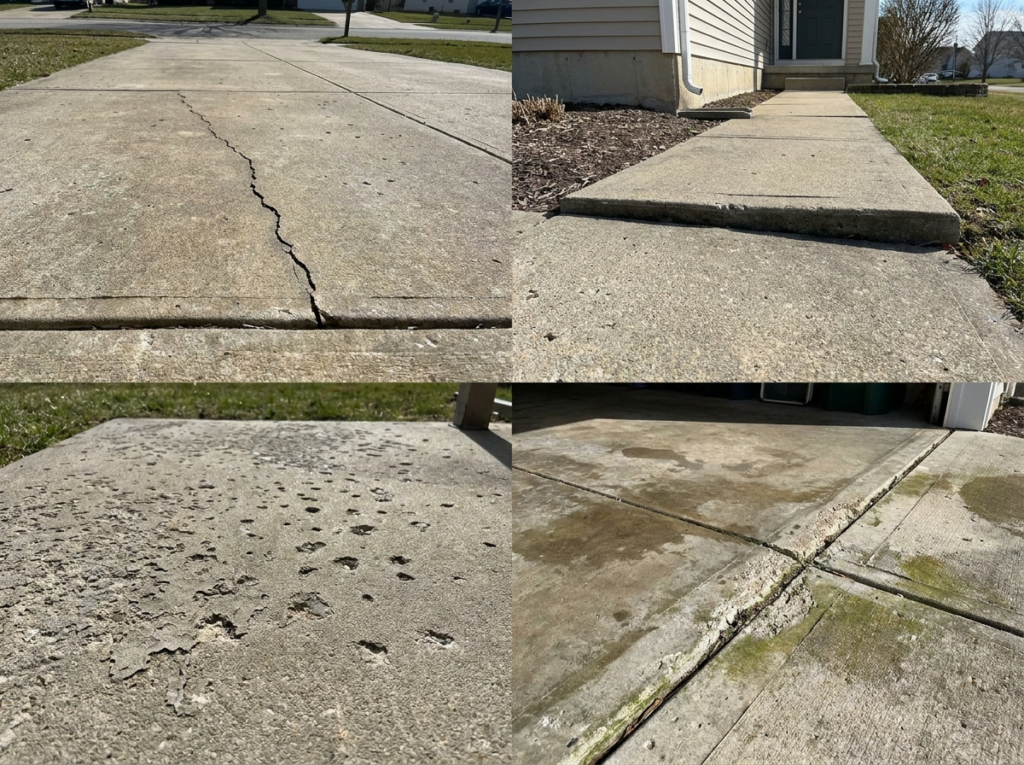
Cracks may be isolated, repeated, narrow, wide, stable, active, or associated with movement elsewhere in the slab. Broken corners and edges can also develop around joints, steps, driveways, and high-use areas. The pattern, location, surrounding movement, and condition of the concrete matter more than simply noting that a crack exists.
Sunken, Settled or Uneven Slabs
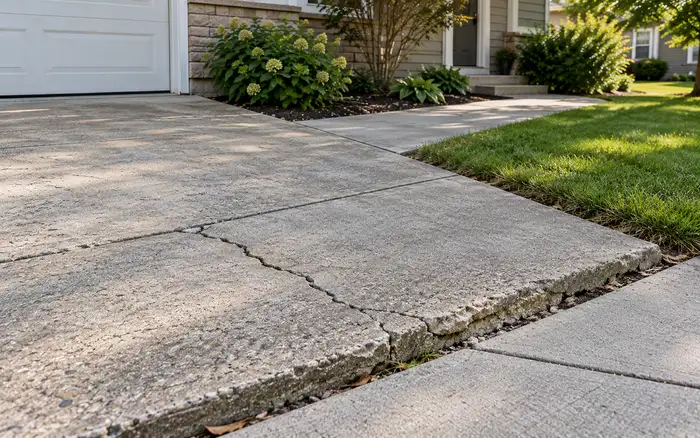
A slab that has dropped relative to an adjacent section may create poor transitions, ponding, awkward access, or visible changes in grade. Settlement can develop when support beneath a slab changes, soil moves, voids form, water affects the base, or original construction conditions were insufficient for the use.
Pitting, Spalling and Surface Deterioration
Surface distress may include flaking, scaling, pitting, rough texture, exposed aggregate, worn finish, or areas where the upper layer has deteriorated. The condition can be cosmetic, functional, or related to deeper concrete quality or exposure issues. Resurfacing or localized surface repair may be discussed when the underlying slab is otherwise suitable. If deterioration extends deeper, movement is active, or large areas are failing, replacement may deserve consideration.
Drainage Problems and Recurring Damage
Water collecting near joints, flowing toward a structure, eroding adjacent soil, or repeatedly entering damaged areas can be a clue that the repair decision involves more than surface appearance. When damage returns after previous repairs, ask whether the earlier work treated only the symptom. Recurrence can justify looking more carefully at drainage, support, movement, transitions, loading, and the broader condition of the slab.
Understand the Cause
Why Concrete Cracks, Settles and Deteriorates
Repair selection improves when the visible condition is connected to a plausible cause. Several factors can contribute at the same time, so the list below is a diagnostic framework rather than a claim that any one factor explains a particular property.
Soil, Subgrade and Base Movement
Concrete depends on the support beneath it. Changes in soil moisture, inadequate compaction, loss of support, erosion, fill settlement, or other movement beneath a slab can change how it bears loads. Once support becomes uneven, cracking or settlement can appear at the surface. Because the visible slab may not reveal everything happening below it, a repair proposal should explain whether the contractor believes support conditions are relevant and how that conclusion affects the recommended method.
Water, Drainage and Erosion
Water can influence concrete from above, below, and around its edges. Poor drainage may wash out supporting material, keep joints wet, contribute to seasonal soil movement, or direct runoff toward already-damaged areas. Correcting a surface defect without considering recurring water movement can leave the original cause in place. Drainage-related work should therefore be clearly separated in the scope so the owner knows what is and is not being addressed.
Temperature Changes and Freeze-Thaw Exposure
Ohio exterior concrete experiences seasonal temperature changes and repeated moisture exposure. Freeze-thaw conditions are a legitimate regional topic when evaluating existing flatwork, but technical recommendations about mixtures, air entrainment, sealing, or deicing should be based on authoritative guidance and the actual concrete system. Weather exposure can interact with existing cracks, porous surfaces, joints, drainage, and previous repairs, so visible deterioration should be evaluated in context.
Loads, Joints and Existing Construction Conditions
Vehicle loads, concentrated loads, slab geometry, transitions, joint layout, edge support, thickness, reinforcement, and original placement conditions can all affect how concrete behaves over time. These factors are project-specific and should not be reduced to one universal repair rule. When a contractor recommends repair, ask which conditions they believe are active and whether the proposed method addresses appearance only, movement, support, or a combination of issues.
Compare the Options
Common Concrete Repair Methods and What They Address
“Concrete repair” is an umbrella term. Localized patching, crack repair, leveling, joint repair, resurfacing, sealing, and replacement solve different problems. The correct approach depends on what is damaged, why it is damaged, whether movement is active, how the surface is used, and what result the owner expects.
Crack and Localized Surface Repair
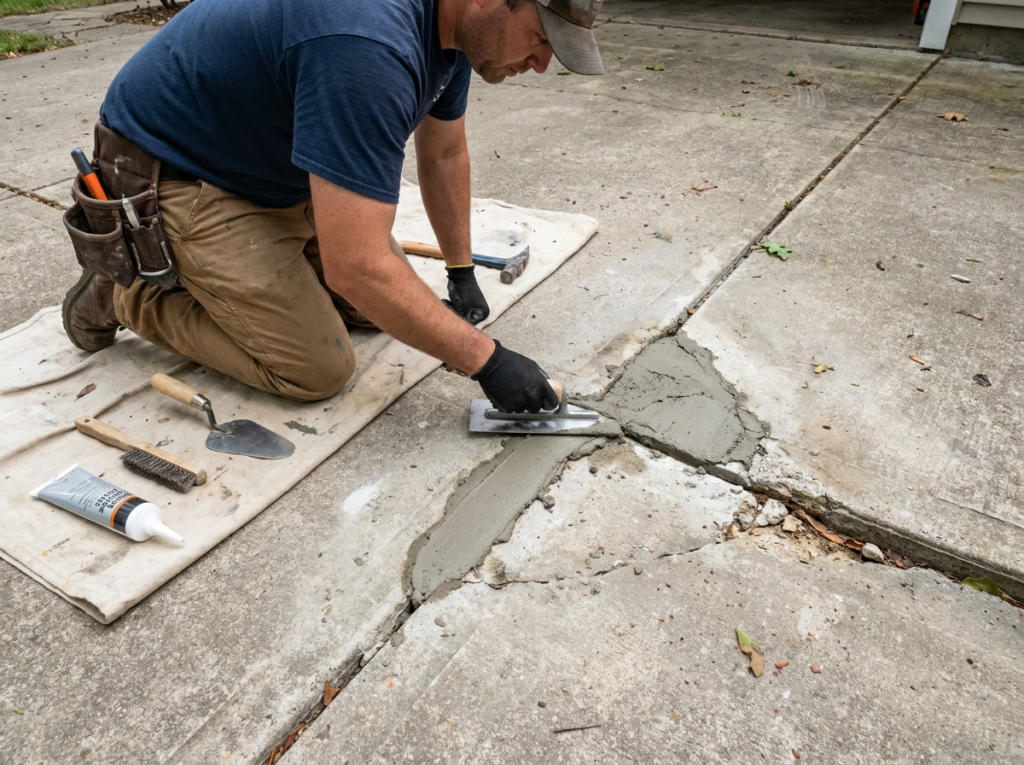
Localized repair focuses on a specific defect rather than changing the entire slab. Depending on the condition, a contractor may evaluate cleaning, routing, filling, patching, edge repair, or other localized restoration techniques.
- Best discussed after the cause is considered
- Scope should define what is removed and replaced or filled
- Appearance matching may be imperfect
- Future movement cannot be ruled out universally
Joint and Edge Repairs
Joints and slab edges often experience different stresses than the center of a slab. Deteriorated joint material, broken edges, spalled corners, or movement between slabs may require targeted work around the transition rather than a general surface coating.
Ask whether the repair preserves intended movement at the joint, whether adjacent slabs are stable, and how the repair will transition to the existing concrete.
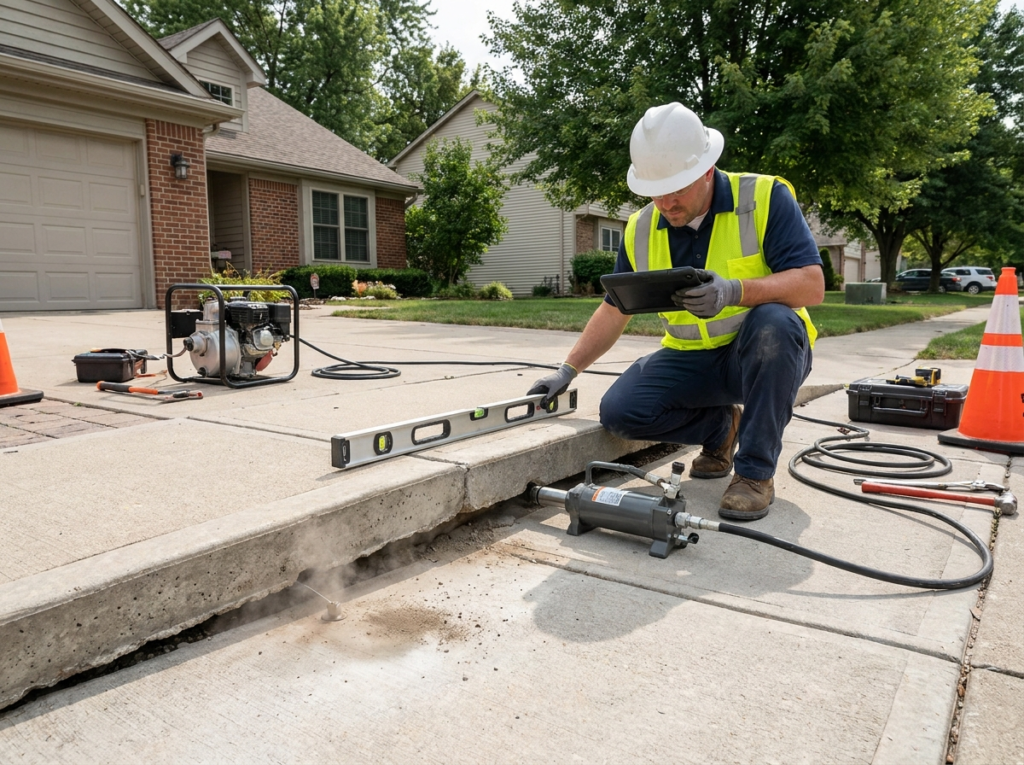
Concrete Leveling and Lifting
Leveling is intended to adjust the elevation of settled concrete when the slab itself is otherwise considered suitable for the technique. Contractors may use different materials and systems, so the proposed method and its limitations should be explained rather than assumed.
- Focuses on elevation and support-related symptoms
- Existing slab condition still matters
- May require separate crack or joint work
- Not interchangeable with resurfacing
Sealing and Surface Protection
Sealers and protective treatments may be part of maintenance or restoration for suitable concrete, but they do not correct settlement, rebuild missing support, or make structurally unsuitable concrete sound. Product selection, surface preparation, application conditions, and maintenance intervals are system-specific.
Any proposal involving a coating or sealer should identify the product family, preparation expectations, appearance change, maintenance guidance, and limitations.
| Approach | Main Problem It May Address | What It Does Not Automatically Solve |
|---|---|---|
| Localized repair | Specific cracks, chips, edges, or limited defects | Ongoing settlement, widespread deterioration, broader drainage issues |
| Leveling / lifting | Elevation differences in suitable settled slabs | Major surface deterioration, broken slabs, all underlying causes |
| Resurfacing | Worn or deteriorated surface on a suitable existing slab | Active movement, unstable support, major structural or elevation problems |
| Sealing / protection | Surface protection or maintenance where appropriate | Settlement, missing support, significant broken concrete |
| Replacement | Broader reconstruction when existing concrete is no longer a good repair candidate | Site problems unless the replacement scope also addresses them |
Secondary Service Intent
When Concrete Resurfacing May Be an Option
What Resurfacing Is Designed to Address
Concrete resurfacing generally places a new bonded surface or overlay system over suitable existing concrete after the substrate has been prepared. It can be considered when the goal is to renew appearance, correct certain surface defects, or create a new finish without removing the entire slab.
Resurfacing is not simply “painting over” damaged concrete. The existing surface has to be evaluated, prepared, and judged compatible with the selected system. Product requirements differ, so exact thickness, preparation steps, bonding products, curing, and expected service life should come from the specific manufacturer or technical system being used.
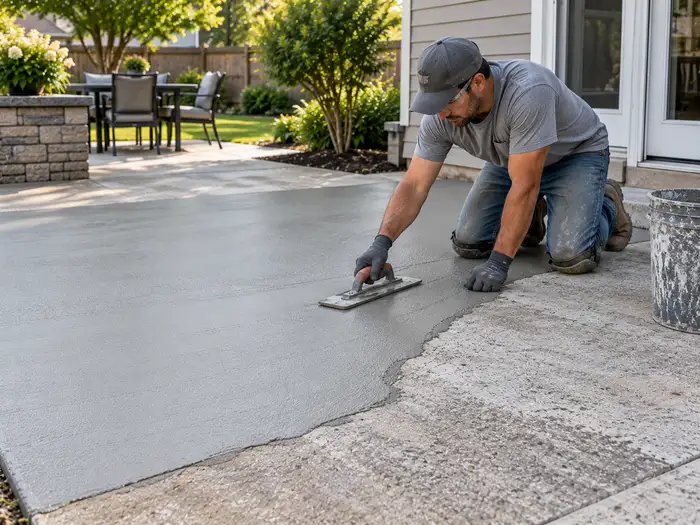
Why the Condition Under the Surface Matters
An overlay becomes part of the existing slab system. If the substrate is unstable, actively moving, badly broken, heavily contaminated, or affected by unresolved moisture or support problems, a decorative or restorative surface layer may not address the cause. The repair discussion should therefore separate surface condition from slab condition.
Resurfacing Versus Leveling
Resurfacing changes the surface; leveling changes elevation or support conditions. A settled but otherwise intact slab may require an elevation-focused solution. A stable slab with broad surface wear may be evaluated for resurfacing. Some projects can involve more than one method, but they should not be treated as interchangeable services.
Repair or Replace?
Should You Repair or Replace Damaged Concrete?
The decision should be based on the whole condition of the concrete, not on a single universal crack size or percentage threshold. Repair can be appropriate for some localized or correctable conditions; replacement becomes more reasonable when damage, movement, support problems, functional issues, or long-term goals make repeated localized work unattractive.
Extent and Type of Damage
One isolated crack is different from cracking across multiple slabs. Surface scaling is different from settlement. A broken corner is different from a slab that has moved several times. Compare the extent, pattern, and type of damage before choosing a method.
Underlying Causes and Recurring Movement
Previous repairs that repeatedly fail can indicate that the visible defect is being recreated by an underlying condition. Before repairing again, ask whether settlement, drainage, support loss, movement, loading, or another cause is still active.
Function, Appearance and Long-Term Goals
Owners may prioritize safe transitions, vehicle access, drainage, curb appeal, decorative consistency, budget, minimum disruption, or long-term reconstruction. Two properties with similar cracks can reasonably reach different decisions because their goals differ.
When a Professional Evaluation Becomes Important
When damage is widespread, movement is continuing, multiple elevations are affected, previous repairs have failed, or the owner is unsure whether a repair is appropriate, a site-specific evaluation is more useful than applying an internet threshold.
Repair May Deserve Consideration When
- Damage is localized
- The slab remains generally serviceable
- The suspected cause can be addressed or is not actively worsening
- The desired result can be achieved without rebuilding the whole area
Replacement May Deserve Consideration When
- Damage is widespread
- Movement or settlement is recurring
- Large areas are broken or deteriorated
- Drainage, elevation, layout, or use requires broader reconstruction
Different Surfaces, Different Priorities
Repair Considerations for Different Concrete Surfaces
Driveways
Driveways carry vehicles and connect garages, sidewalks, aprons, lawns, and streets. Repair decisions should consider settlement, wheel paths, broken panels, drainage, joints, garage transitions, and whether the existing driveway remains suitable for the intended loads. Localized repair, leveling, resurfacing, or replacement may each be discussed depending on the condition. For broader driveway planning, see the dedicated Concrete Driveways Columbus Ohio page.
Sidewalks and Walkways
Walkways emphasize pedestrian transitions, grade changes, edges, joints, and relationships to roots, landscaping, drainage, and adjacent slabs. Uneven sections may prompt leveling or replacement evaluation, while surface defects may call for a different repair method. Confirm responsibilities for public sidewalks and adjoining public areas with the contractor and relevant local authority before agreeing to the work.
Patios and Pool Areas
Patios combine appearance with outdoor-living use, furniture loads, drainage, nearby structures, and landscaping. Pool-area concrete adds wet-surface and water-management considerations. Surface deterioration may be evaluated for restoration or resurfacing when the underlying slab is suitable. Decorative restoration should be coordinated with existing color, texture, and surrounding materials rather than treated as a generic patch.
Porches, Steps and Entry Areas
Steps, stoops, and entrances involve edges, risers, landings, transitions, handrail interfaces, and repeated foot traffic. Broken edges or settlement can affect how the area functions, so repair selection should consider geometry and movement as well as appearance. Any accessibility or code guidance should be based on current authoritative requirements for the actual property and scope.
Garage Floors and Other Slabs
Garage and interior slabs can develop cracks, settlement, pitting, surface wear, or joint damage. Vehicle use, oil or chemical contamination, moisture, coatings, and indoor environmental conditions can affect repair preparation and product selection. Surface coatings should not be used to hide unresolved movement or contamination without appropriate preparation.
Decorative Concrete
Stamped or colored surfaces create an additional appearance challenge because localized repairs rarely match surrounding color and texture perfectly. Restoration goals should be discussed before work begins so expectations are realistic. See Stamped Concrete Columbus Ohio for design and maintenance considerations.
Regional Context
How Columbus and Ohio Conditions Can Affect Concrete
Freeze-Thaw and Seasonal Temperature Changes
Exterior concrete in Columbus is exposed to cold weather, moisture, warming periods, and repeated seasonal change. Existing cracks and porous surfaces can interact with those conditions. Technical prescriptions should be based on the actual repair system rather than broad claims copied from competitors.
Moisture, Drainage and Soil Conditions
Spring rain, runoff, changing ground moisture, downspouts, grade, and soil support can influence existing slabs. When settlement or recurring cracking appears, inspect how water moves around the concrete instead of evaluating only the top surface.
Winter Maintenance and Deicing Considerations
Winter maintenance can affect exterior concrete and repair materials, but product compatibility and deicing guidance vary. Follow the manufacturer and contractor recommendations for the actual repair or resurfacing system rather than a universal rule.
Project Expectations
What to Expect From a Concrete Repair Project
Evaluating the Damage and Its Possible Cause
The process should begin with the visible symptoms, the affected surface, whether movement appears active, previous repairs, drainage, transitions, use, and the broader condition of the slab. Photos can help with initial screening, but some decisions require on-site observation.
Choosing an Appropriate Repair Approach
The proposed method should connect directly to the diagnosed condition. Ask why localized repair, leveling, resurfacing, protection, or replacement is being recommended and what the method is not expected to fix.
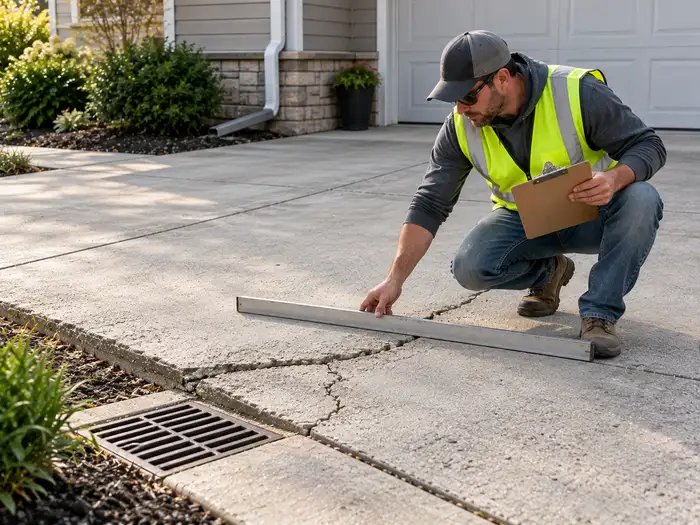
Preparation, Repair and Cleanup
Preparation can include cleaning, demolition, routing, grinding, removal of loose material, surface profiling, access setup, masking, lifting preparation, or other work depending on the method. The written scope should define what is included.
Curing, Protection and Follow-Up
Some repair materials and resurfacing systems require curing or protection before normal use. Timing is product- and method-specific. Follow the actual system instructions and keep written maintenance and warranty information supplied with the project.
Estimate Factors
What Affects the Cost of Concrete Repair?
Repair pricing is highly scope-dependent. This page does not publish an unsupported Columbus price-per-square-foot because different repair methods, products, preparation requirements, access conditions, and causes can make two similarly sized areas very different projects.
Type and Extent of Damage
A short isolated crack, a settled slab, widespread spalling, broken steps, and recurring movement require different labor, materials, equipment, and decision-making.
Repair Method and Surface Area
Leveling, localized repair, resurfacing, joint work, sealing, and replacement are different scopes. Surface area matters, but method often matters just as much.
Access, Preparation and Site Conditions
Equipment access, demolition, cleaning, contamination, edge conditions, landscaping, drainage, elevation, masking, and protection can all affect the work required before the actual repair is performed.
Why Written Scope Matters When Comparing Estimates
A low total is not necessarily comparable if one quote excludes preparation, cleanup, drainage work, sealing, joint repair, disposal, protection, or follow-up that another includes.
| Compare | Look For in Writing |
|---|---|
| Diagnosis | What condition is being repaired and what cause is suspected? |
| Method | What specific repair category or system is proposed? |
| Preparation | What cleaning, removal, grinding, routing, lifting prep, or substrate work is included? |
| Finish | What appearance should the owner expect, including color or texture differences? |
| Protection / curing | What access restrictions or care instructions apply to the actual material? |
| Exclusions | What causes, drainage issues, adjacent surfaces, or future movement are not included? |
Hiring Checklist
How to Compare Concrete Repair Contractors in Columbus
Ask How the Cause of the Damage Was Evaluated
A repair contractor should be able to explain what they observed, what they think is contributing to the damage, and which uncertainties remain. A proposal that jumps directly to a product without discussing the condition deserves closer review.
Compare the Proposed Repair Method and Scope
Make sure competing quotes are solving the same problem. One contractor may propose leveling while another proposes replacement. The totals are not comparable until the reasoning and included scope are understood.
Review Relevant Project Examples and References
Ask for examples of repairs involving similar damage and surfaces, not only unrelated new concrete installations. Before-and-after photos are useful when the project context is genuine and clearly described.
Verify Credentials, Insurance and Warranty Terms
Verify applicable business credentials, insurance, written warranty terms, exclusions, references, and who will actually perform the work. Do not rely solely on badges or claims displayed on a website.
After the Repair
How to Care for Concrete After Repairs
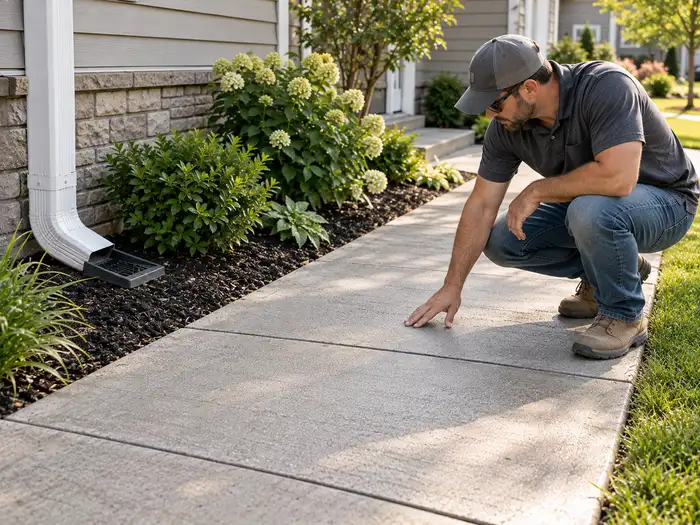
Manage Water and Drainage Around Concrete
Continue watching how water moves around the repaired area. Changes in grading, downspouts, erosion, ponding, or adjacent landscaping can affect slabs even after a good repair.
Keep Surfaces and Joints Maintained
Keep debris out of joints and follow the specific cleaning, sealing, or coating guidance for the installed material. Avoid assuming that every sealer, cleaner, or deicing product is compatible with every repair system.
Watch for New or Recurring Movement
Monitor the repaired area and nearby slabs. A new crack, opening joint, renewed settlement, or recurring water symptom can provide useful information about whether the underlying condition is still changing.
FAQs
Frequently Asked Questions About Concrete Repair in Columbus
Can Cracked Concrete Be Repaired?
Some cracks can be repaired or treated, but repairability depends on the crack pattern, movement, slab condition, cause, location, and desired result. A crack caused by ongoing settlement requires a different discussion from an isolated stable surface crack.
Can Sunken Concrete Be Leveled?
Some settled slabs may be candidates for professional leveling or lifting systems when the existing slab and site are suitable. The method does not automatically repair severe surface deterioration or guarantee that movement will never recur.
When Is Resurfacing Better Than a Localized Repair?
Resurfacing may be considered when deterioration affects a broader surface area but the underlying concrete remains suitable for an overlay system. Localized repair may make more sense when damage is confined to a small area. Suitability requires evaluation of the existing slab.
How Do I Know Whether Concrete Needs Replacement?
Replacement deserves consideration when deterioration or movement is widespread, slabs are badly broken, settlement is recurring, previous repairs repeatedly fail, or drainage, elevation, layout, or functional goals require broader reconstruction. Avoid using a single crack-width or surface-percentage rule.
How Long Does a Concrete Repair Project Take?
There is no universal duration. Repair method, preparation, area size, access, weather, curing, product requirements, and the number of affected locations all influence the schedule. Ask for a project-specific sequence.
What Should Be Included in a Concrete Repair Estimate?
A useful estimate should identify the condition being repaired, proposed method, preparation, materials or system, affected area, finish expectations, cleanup, protection or curing requirements, exclusions, schedule assumptions, payment terms, and any written warranty actually offered.
Next Step
Get a Site-Specific Concrete Repair Evaluation
The most useful repair inquiry includes photos, the affected surface, when the damage was first noticed, whether it is changing, previous repairs, water or drainage symptoms, and the owner’s long-term goal.
Take the next step
A clearer brief. A more useful conversation.
Gather your project location, approximate dimensions, photos and priorities before speaking with a contractor.
project checklist
Match the repair question to the visible problem
Cracks or broken edges
Note where damage occurs and whether it has changed. Photograph the wider surface as well as the defect, and mention previous repairs. Ask what the proposed treatment addresses and whether movement could affect the result.
An uneven or settled slab
Describe the elevation difference and any nearby water pooling. Ask whether lifting is suitable for the slab and its support, how adjoining surfaces will meet afterward, and whether drainage work is a separate part of the proposal.
A worn or unattractive surface
Ask whether the slab is a suitable base for resurfacing and what preparation is included. An appearance-focused treatment does not by itself resolve every cause of movement. Compare a surface repair with replacement when the underlying condition remains uncertain.